
Flexible Sugar Grinding Machines for Modern Food Processing
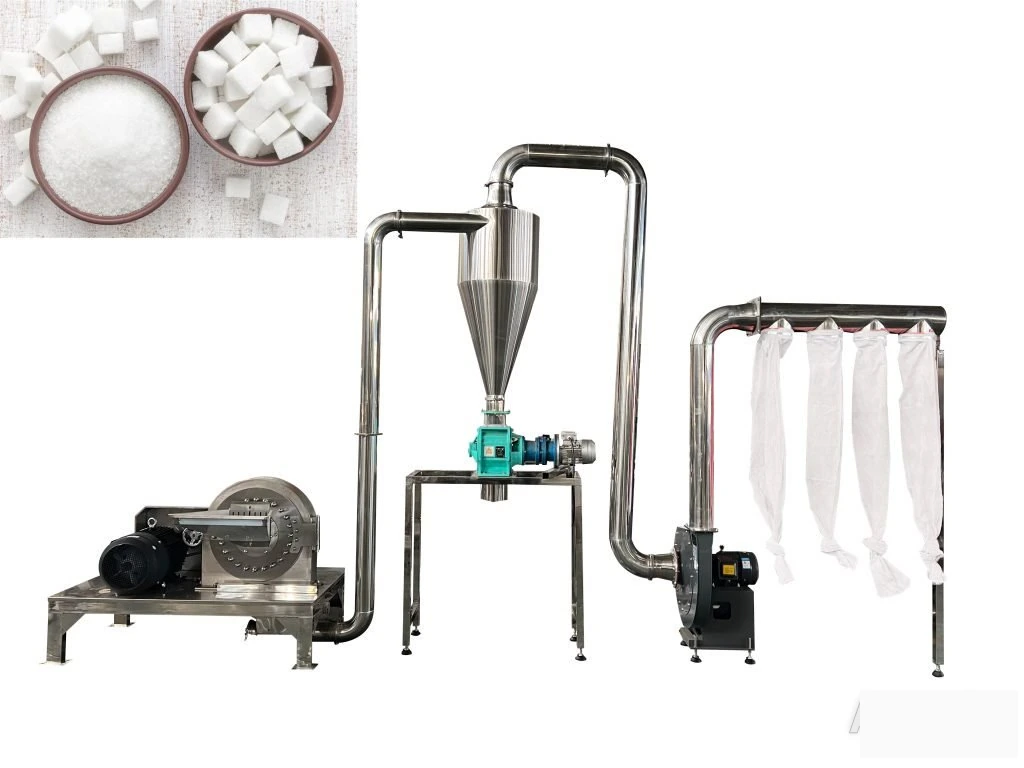
Why the Size of a Sugar Crystal Is a Product Decision
Most food formulas treat sugar as a single ingredient: add 200 grams, mix, and move on. But anyone who has watched a batch of icing turn gritty, a cake crumb become tough, or a fruit-tea layer dissolve too fast knows that sugar's physical form changes the eating experience. Coarse crystals add crunch; fine powders dissolve instantly; mid-size grains balance sweetness release with structure.
In commercial food production, that relationship between texture and function used to force an expensive choice: stock several grades of sugar, or accept the compromise of one size for every product. Flexible sugar grinding removes the compromise. With the right milling equipment, a processor can generate the exact sugar profile a recipe needs — on demand, in the same day, in the same room.
That is the quieter meaning of flexibility in sugar processing: not faster throughput for one product, but rapid, repeatable changeover between particle sizes without losing hygiene, consistency, or yield.
Every Recipe Speaks a Different Sugar Language
Before choosing equipment, it helps to map the sugar forms that actually appear on a production floor. The table below summarizes the most common white sugar fractions and where each one earns its place.
| Sugar form | Typical particle size | Where it is used | Why size matters |
|---|---|---|---|
| Coarse / sanding sugar | Largest crystals in the white sugar range | Cookie tops, donut decoration, crunchy crusts | Reflects light, resists quick melting, adds audible texture |
| Caster (fine) sugar | Mid-fine fraction, dissolves quickly | Meringues, sponge cakes, light beverages | Blends evenly into batters without excess aeration or long mixing |
| Icing / powdered sugar | Very fine powder with silky mouthfeel | Frostings, glazes, dusting, macarons | Dissolves almost instantly; prevents grittiness in smooth creams |
| Ultra-fine confectioners' grades | Micro-fine particles for specialty recipes | High-end pastry, dry mixes, premium coatings | Delivers a velvety finish that standard grinders cannot repeat |
Notice that the difference between a crunchy topping and a silky glaze is not the sugar itself — it is simply where the grinder stopped. A machine with a practical fineness range of roughly 10 to 120 mesh, changed by swapping screens in seconds, lets a single line speak all of these dialects.
Three Ways Flexible Grinding Pays for Itself
Flexible sugar grinding is not only a technical upgrade; it changes operational economics. The most visible returns appear in three areas:
- Inventory simplification. Instead of warehousing multiple bags of coarse, caster, and powdered sugar — each with its own expiry and moisture risk — a plant stores one raw material and mills it to spec before use.
- Faster product experimentation. When a baker or R&D team wants to test a new topping, a cookie crumb, or a novel icing, they can run a small trial batch at the exact fineness required, instead of waiting for a custom milled order.
- Less downtime between product runs. A screen change that takes around 30 seconds, without tools, turns what used to be a changeover chore into a routine step between batches.
What "Food-Safe" Really Means When Sugar Meets Metal
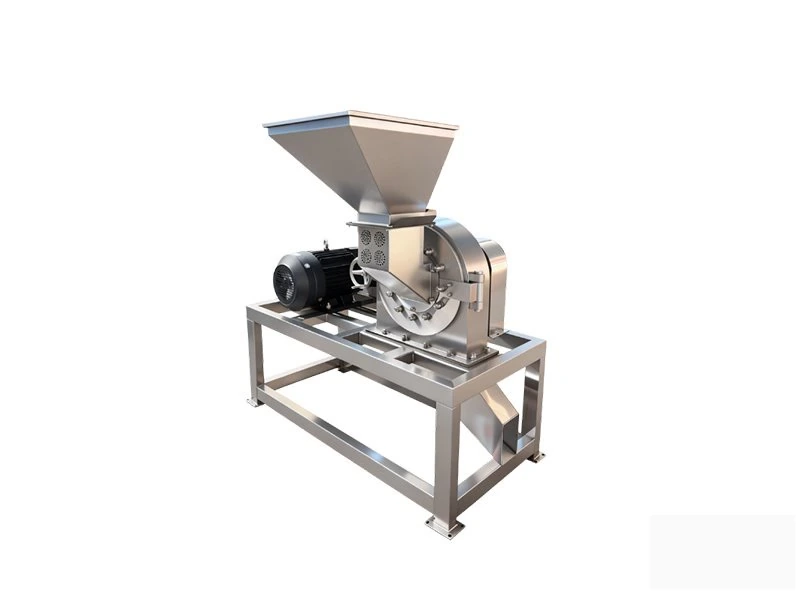
White sugar is not the innocent powder it looks like in a bag. Under heat and friction it becomes sticky; in humid air it clumps; and in fine form it behaves almost like a liquid dust. That is why food-safe sugar grinding is as much about materials and cleaning as it is about blades and motors.
- Stainless steel where it counts. Grinding chambers, hoppers, and discharge paths that touch the product are typically built from food-grade 304 stainless steel — corrosion-resistant, easy to wipe down, and compliant with food plant hygiene expectations.
- Anti-clumping design. Interior geometry and smooth transitions reduce the places where sugar can cake, keeping changeover times short and first-batch quality stable.
- Cleanability as a feature. Removable parts and accessible openings let operators flush the system between white sugar and other dry ingredients, protecting allergen control programs.
When evaluating a sugar grinding machine, ask not only "how fine can it go?" but also "how fast can I clean it, and what happens when a humid Tuesday meets a sticky sugar batch?" The second question separates true food-processing equipment from repurposed spice mills.
Dust Management: The Quiet Cost of Fine Sugar
The finer the sugar, the more it wants to escape. Uncontrolled fines create three problems at once: lost yield, a sticky film on equipment, and a working environment that is difficult to keep clean and safe. Dust collection is therefore not an accessory for serious sugar grinding — it is part of the process design.
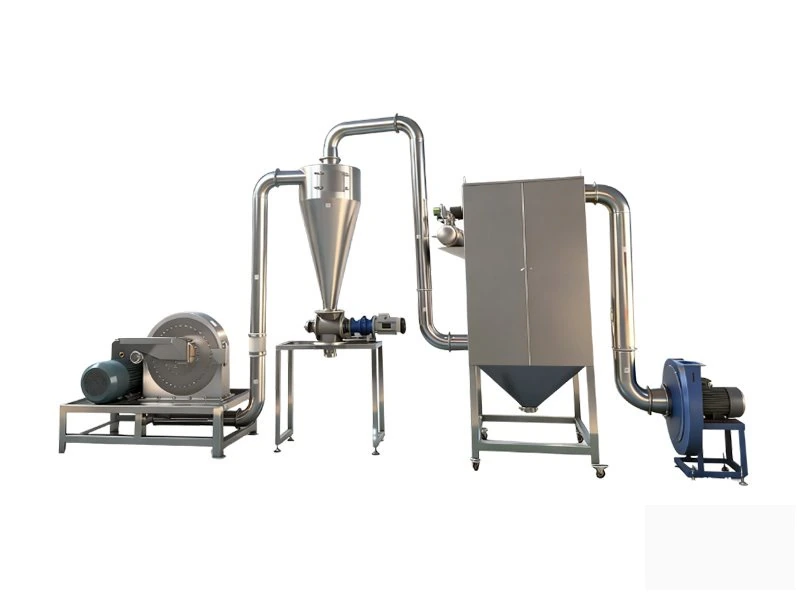
Two collection approaches dominate in powder food lines, and the right choice depends on the scale and dust load:
| Option | How it works | Best fit | Maintenance outlook |
|---|---|---|---|
| Cyclone collector | Uses centrifugal force to drop sugar dust out of the air stream | Compact lines and moderate dust volumes | Simple, low filter cost, easy routine inspection |
| Pulse-jet collector | Filter bags cleaned by short bursts of compressed air | High-volume or very fine grinding where capture efficiency matters | More parts to maintain, but stronger containment over time |
| Hybrid system approach | Cyclone pre-separation followed by a pulse filter for the finest fraction | Continuous production lines and multiple grinders sharing one system | Best yield recovery; requires coordinated duct and airflow design |
From Bakeries to Beverage Bars: Who Benefits First
The value of flexible sugar grinding is not uniform across the industry. Some segments feel it immediately, others use it opportunistically:
- Bakeries and pastry kitchens. They move between cake crumbs, meringue sugar, and icing sugar within one shift — the classic use case for adjustable fineness and quick screen changes.
- Beverage and tea brands. A medium-coarse fraction preserves layering effects in fruit teas and coffee drinks, while fine sugar would dissolve too quickly and flatten the visual experience.
- Confectionery and dessert manufacturers. Ultra-fine grades give coatings, fillings, and finished sweets a consistent, premium mouthfeel.
- Small-batch and artisanal producers. Compact machines let them make fresh icing sugar at the back of the shop, on demand, without buying pre-ground inventory.
- Food R&D and pilot plants. Laboratory flexibility means test batches can reproduce the exact particle size planned for full-scale production.
For each of these users, the pattern is the same: the machine's value is not only in grinding power, but in the range of products one investment can serve.
A Practical Pre-Purchase Checklist for Sugar Grinders
Use the following questions to shortlist machines with confidence:
- Does the fineness range cover the particle sizes my recipes actually need, and how is the range adjusted — screens, speed, or both?
- How long does a screen or configuration change take, and does it require tools or specialist training?
- Are all product-contact surfaces food-grade stainless steel, and are they easy to access for cleaning?
- Is the machine sized correctly for both my steady-state throughput and my peak trial-batch loads?
- What dust collection option is offered, and does the supplier help size it for the room and the product?
- Does the machine manage heat and moisture buildup, which are the two enemies of consistent sugar grinding?
- Can the supplier run a test with my actual sugar, and can I inspect changeover and cleaning procedures myself?
- Is documentation, spare parts, and responsive service available for the market region where I operate?
Frequently Asked Questions
Can one sugar grinding machine produce both coarse sugar and icing sugar?
Yes. Equipment with a practical fineness range of roughly 10 to 120 mesh lets operators switch between coarse crystals and ultra-fine icing sugar by changing the screen. The time needed for the changeover is typically under a minute when the screen is designed for tool-free replacement, which is why one grinder can serve multiple product lines in the same day.
Is a sugar grinder different from a general-purpose spice or grain mill?
Yes, in the details that matter. White sugar is hygroscopic, sticky when heated, and prone to caking. A dedicated sugar grinding machine uses food-grade stainless contact surfaces, anti-clumping geometry, and compatible dust collection so that fine sugar does not scatter or absorb moisture during milling. A mill designed for dry spices may not deliver the same consistency or cleanability with sugar.
Do sugar grinders create a lot of airborne dust?
Only if dust management is missing. Fine sugar powder is light and easily becomes airborne, which wastes product and makes the workspace sticky. Most industrial sugar grinders can be paired with a cyclone collector or a pulse-jet collector, and well-configured systems recover most of the fines back into the batch instead of releasing them into the room.
Is flexible sugar grinding only for large factories?
No. Compact models bring the same on-demand milling advantage to artisan bakeries, coffee shops, and small-batch dessert studios, where fresh icing sugar made in-house can replace stored inventory and widen the menu of possible textures.
Conclusion: Flexibility Is the New Capacity
For decades, "capacity" in sugar processing meant one number: tons per hour. Modern food businesses are discovering that a different kind of capacity matters just as much — the ability to answer a new recipe question without buying a new machine, changing a supplier, or waiting a week for a custom grind.
Flexible sugar grinding turns particle size from a fixed specification into a controllable design parameter. Whether the goal is a crisp coarse topping, a smooth icing, or an ultra-fine confectioners' grade, the same stainless, food-safe system can deliver the right texture at the right moment. For bakeries chasing seasonal menus, beverage brands protecting layer visuals, and R&D teams testing at pilot scale, that agility is not a luxury — it is the new baseline for profitable food processing.
Start by mapping the sugar textures your recipes demand, run a grinding test with your own material, and let the machine prove its flexibility before it earns a place on your floor.