
Powder Mixing Equipment
A laboratory powder mixer is the workhorse of small-batch blending in R&D, quality control, and pilot production. This guide covers how it works, the mixer types you can choose from, where each one fits, and how to pick the right machine for your material and scenario.
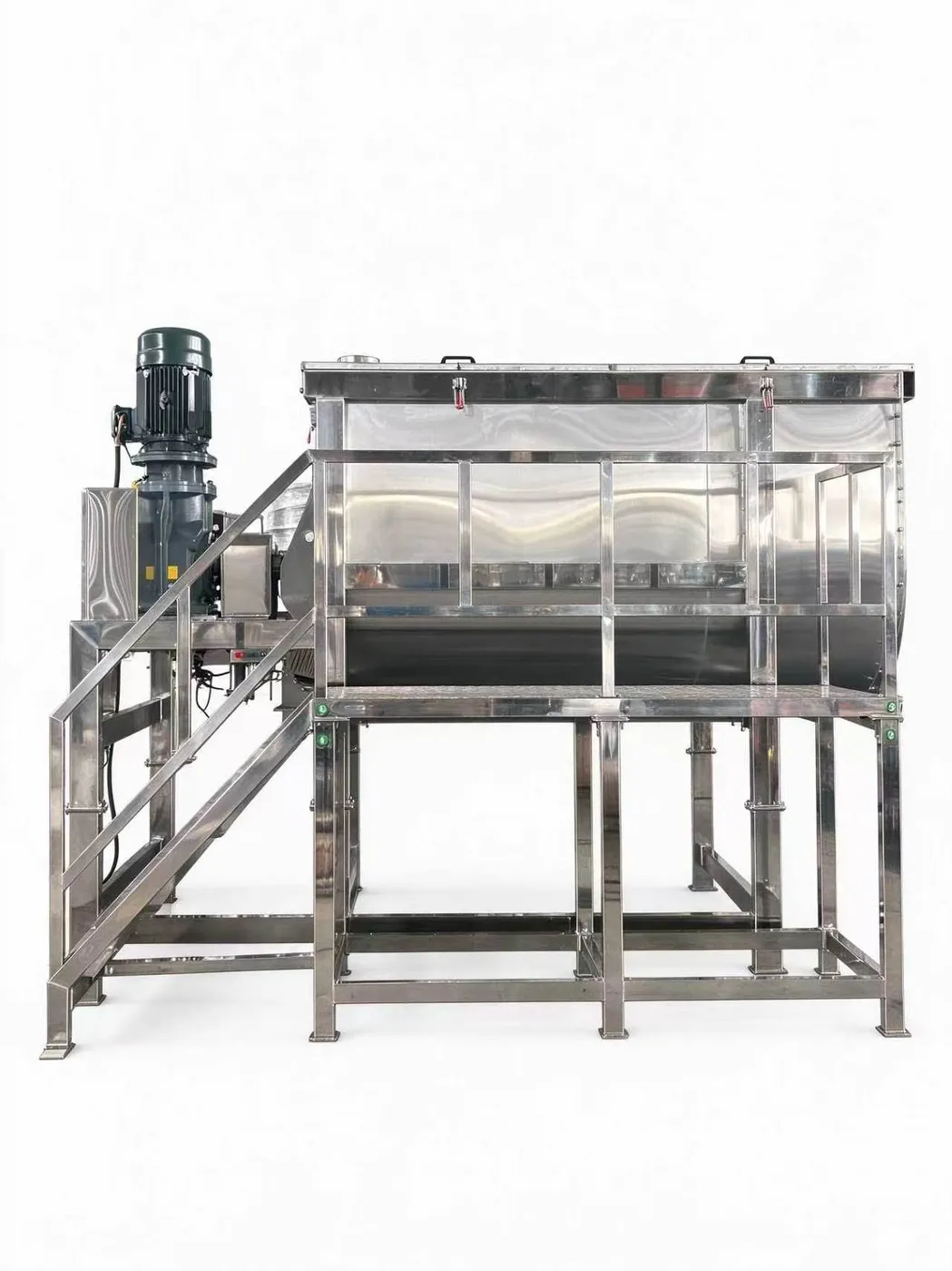
Product Introduction
A laboratory powder mixer is efficient equipment developed specifically for small-batch powder and granule blending inside laboratories. It handles the powdery and granular materials common to chemistry, materials science, food, and pharmaceutical labs, and it does so in a fraction of the space a production-scale blender would occupy.
Where the machine earns its place is consistency. In experimental work, a badly blended sample ruins the entire test — one batch of powder that is 2% off in composition gives you a result you cannot reproduce. A purpose-built lab mixer moves material in three dimensions so every scoop drawn from the container has the same composition as the last. That repeatability is what makes it worth owning versus shaking a jar by hand.
Typical batch sizes run from a few hundred grams up to 20–50 L depending on the model, which covers formulation trials, ingredient screening, and short pilot runs without committing to a plant-scale line.
Working Principle
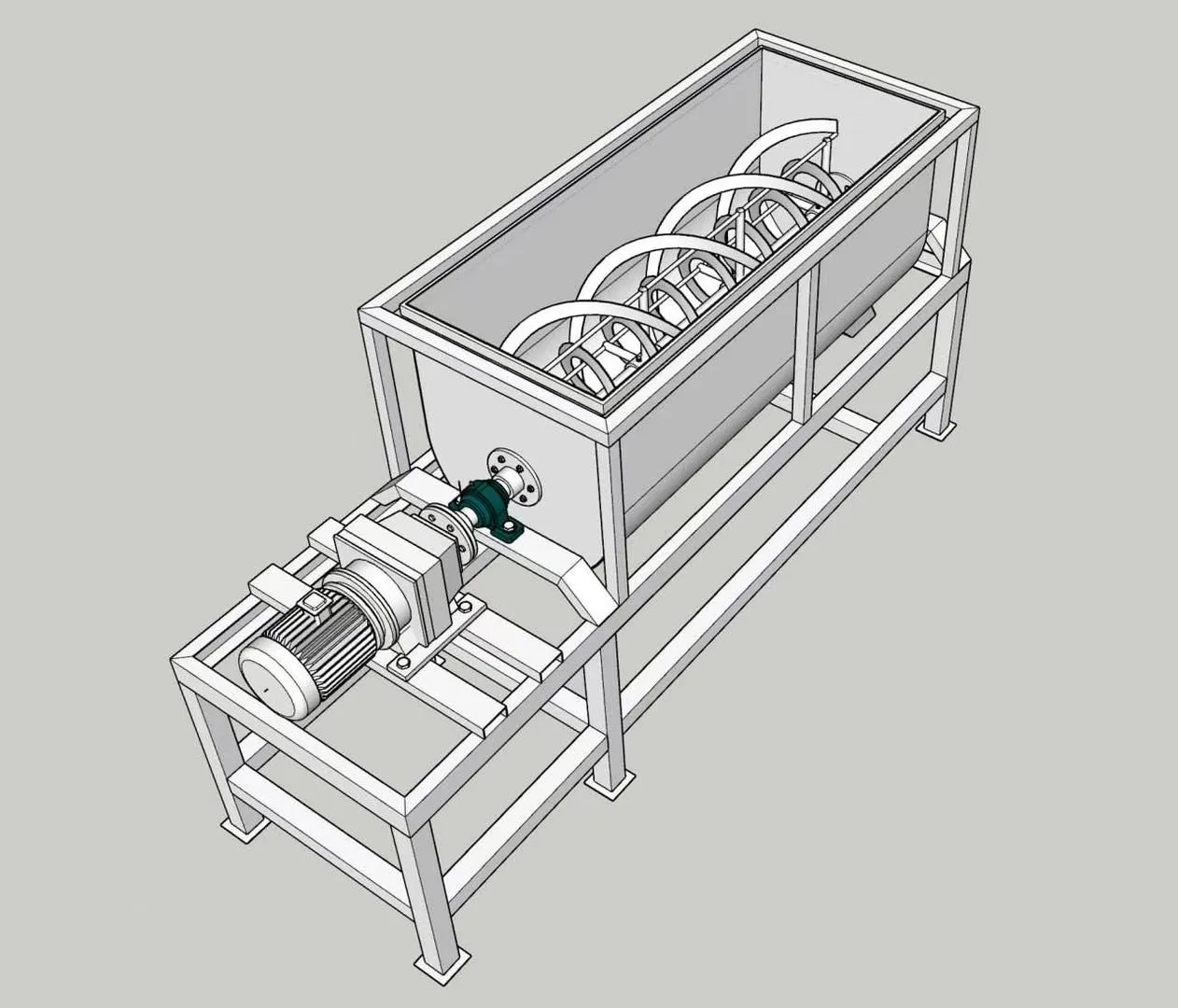
The mixer is driven by an electric motor. The mixing chamber is turned through a chain or gear train, while the internal agitator is driven by a V-belt. During operation the agitator and chamber work together to throw powder in multiple directions — axial, radial, and tangential — so particles of different density, shape, and size keep crossing paths until the blend is uniform.
The mechanism matters less than the outcome: a well-designed lab mixer reaches high homogeneity (typically above 98%) in 3–5 minutes for most free-flowing powders, with no dead zones where material settles and never moves. Gentle designs also keep fragile granules from breaking, which matters when you are blending coated particles or crystals.
Structural Features
- Simple, reliable drive. The chain-wheel and V-belt transmission keep the mechanism straightforward, which means fewer failure points and easy field maintenance.
- Dust-proof bearings. Support bearings use mechanical-seal dust protection, so powder cannot work its way into the raceway and cause contamination or premature wear.
- High loading rate, short cycle. The chamber carries a large fill ratio for its size, so you get a full batch blended in minutes rather than running repeated small passes.
- Compact bench footprint. The unit is small enough to sit on an experimental bench and move when needed, which is exactly where a lab machine has to live.
Mixer Types Compared
“Laboratory powder mixer” is really a category. The right type depends on your material behavior and how clean the blend has to be. The three designs below cover the vast majority of lab scenarios, and all three are available as Pinchuang production equipment you can scale into later.
| Type | How it mixes | Best for | Watch-outs |
|---|---|---|---|
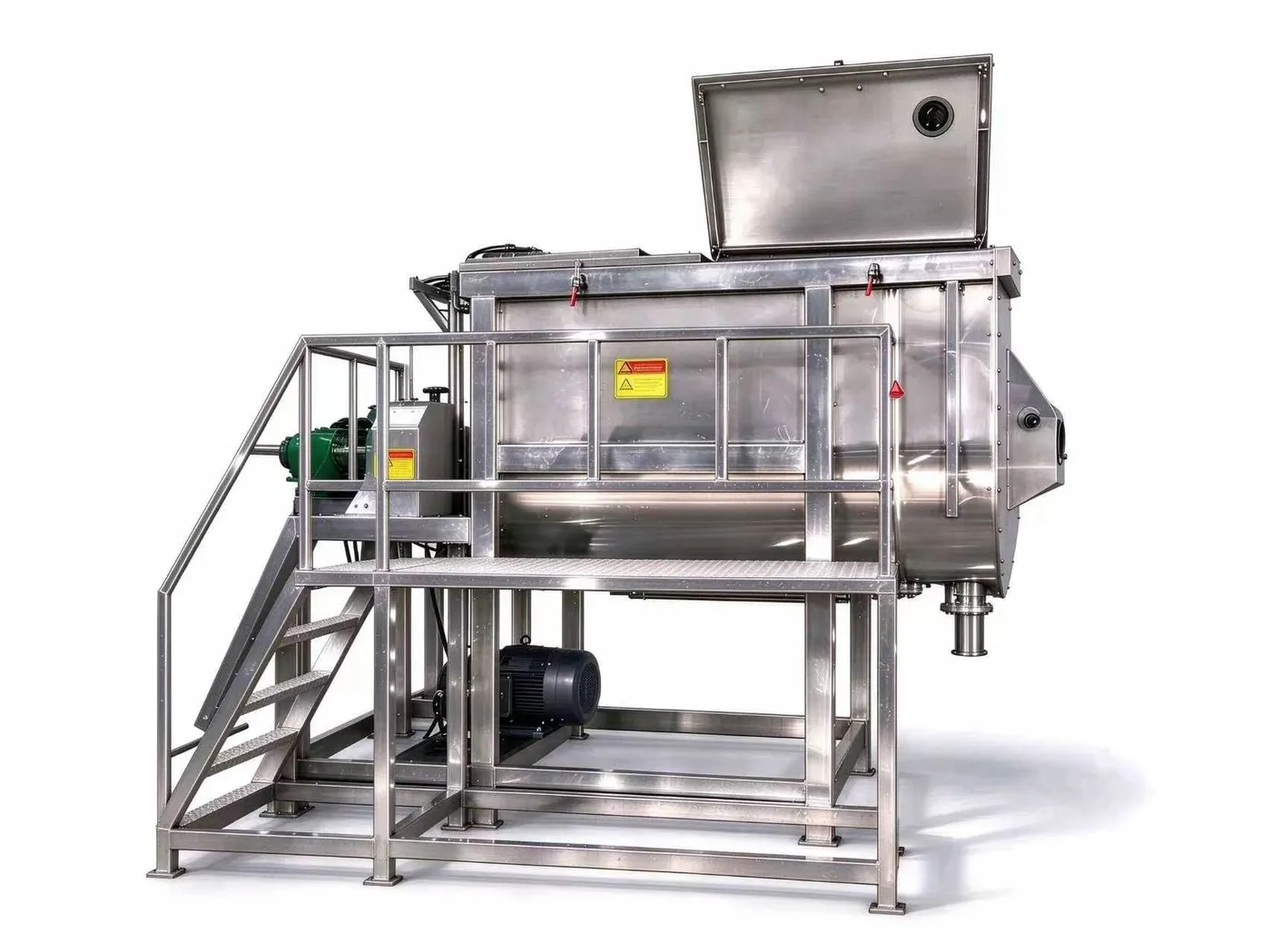
| Ribbon / blade mixer | Counter-rotating helical ribbons sweep material through a U-trough | Free-flowing powders, pre-mixes, food & chemical labs | Less ideal for very fine or cohesive powders |
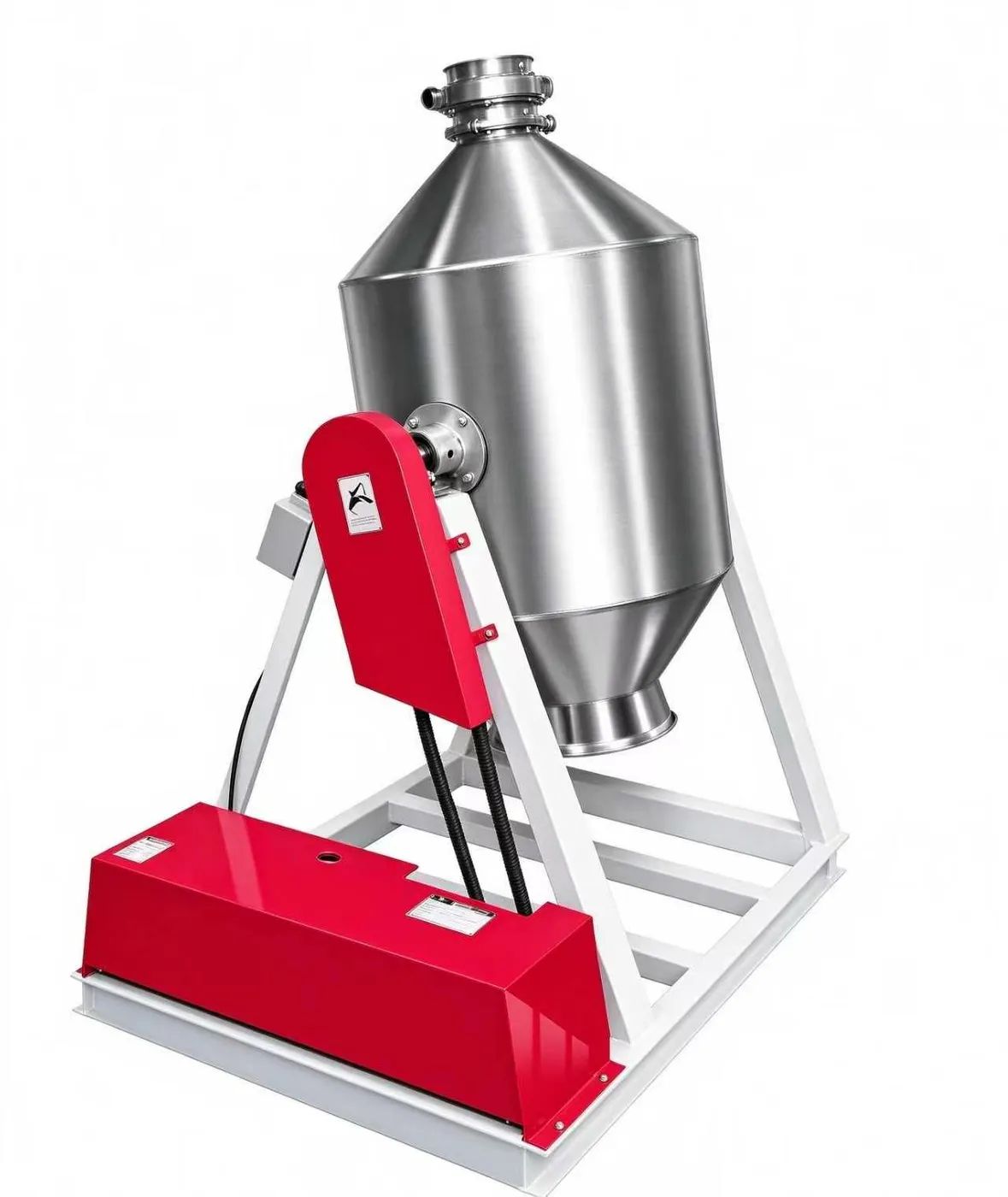
| V-type / conical (vacuum) mixer | Two chambers tumble material; vacuum option removes air and moisture | Pharma, high-purity, moisture-sensitive blends | Slower cycle; higher cost per unit |
| Rotary drum mixer | A rotating drum tumbles the load by gravity | Uniform, low-shear blending of granules & beads | Not for very fine dust without dust control |
Application Scope
The “multiple scenarios” in the name is not marketing — the same bench mixer serves very different labs by swapping the recipe, not the machine:
- Chemical laboratories: blending reagent powders to give synthesis experiments a uniform starting material.
- Materials laboratories: mixing metal, ceramic, and composite powders to support new-material R&D.
- Food laboratories: trial blends of flour, starch, and food additives before a formula goes to production.
- Pharmaceutical laboratories: blending traditional-medicine and Western-preparation powders for formulation studies.
- Cosmetic and battery labs: pigment dispersion and electrode-powder pre-mixing where uniformity decides product quality.
- University teaching and QC: repeatable demo batches and incoming-material verification.
How to Choose the Right Mixer for Your Scenario
Picking a lab mixer is mostly about matching the machine to the material and the constraint, not chasing the biggest spec sheet:
- Batch size: size the chamber to your largest routine batch plus headroom; over-sized mixers blend poorly at low fill.
- Material behavior: free-flowing powders → ribbon mixer; cohesive or very fine → V-type or conical; fragile granules → gentle drum tumbling.
- Hygiene and purity: food and pharma need polished stainless and easy disassembly; a vacuum option protects moisture-sensitive blends.
- Cleanability: if you change formulas between runs, choose a design you can wipe or rinse quickly to avoid cross-contamination.
- Scale-up path: if this lab unit is a pilot for a future line, choose a supplier whose lab model shares design DNA with its production mixers.
Equipment Advantages
- High uniformity. Blend homogeneity above 98% keeps experimental samples representative.
- Fast cycles. Small batches typically finish in 3–5 minutes.
- Low running cost. Efficient drive and small footprint keep energy and operating expense down.
- Easy to run and clean. One-key start and a wipe-clean chamber suit busy lab routines.
Recommended Pinchuang Mixing Equipment
If your lab work is a stepping stone to a production line, these Pinchuang machines share the same mixing principles at larger scale:
- Ribbon Mixer — U-trough ribbon blender for powders and pre-mixes.
- Rotary Vacuum Stainless Steel Mixer — double-cone vacuum mixer for pharma-grade blends.
- Flat-Bottom Mixer — heavy-duty blender for larger batches.
- Rotary Drum Mixer — low-shear tumbling for granules and beads.
- Laboratory Granulator — pair mixing with lab-scale granulation.
- Tea Blending and Flavoring Line — full blending line for flavor and tea applications.
Not sure which type fits your material? Send Pinchuang your material and batch size and the engineering team will recommend the right mixer and share a tailored proposal.
Frequently Asked Questions
What size laboratory powder mixer do I need?
Match the chamber to your largest routine batch with roughly 30% headroom. A 5–10 L unit covers most formulation trials; move to 20–50 L when you start pilot runs. Under-filled mixers blend unevenly, so avoid buying far larger than you will use.
Which mixer type is best for pharmaceutical powders?
For high-purity or moisture-sensitive blends, a V-type / double-cone vacuum mixer is the safer choice — the vacuum step removes air and humidity that could degrade active ingredients. Ribbon mixers are fine for less sensitive pre-mixes.
How long does a typical lab mix take?
Most free-flowing powders reach above 98% uniformity in 3–5 minutes. Cohesive, very fine, or widely density-mismatched materials take longer and may need a different agitator design.
Can one mixer handle both food and chemical samples?
Only if it is fully disassemblable and made from food/pharma-grade stainless steel with no cross-contamination path. For separate product streams, dedicated units are simpler and safer than deep cleaning between runs.
Do I need a dust collection system in the lab?
For small, well-behaved batches, a sealed chamber is enough. Once you handle very fine or toxic dust, add localized dust control or move the operation to a contained system to protect the operator and the sample.