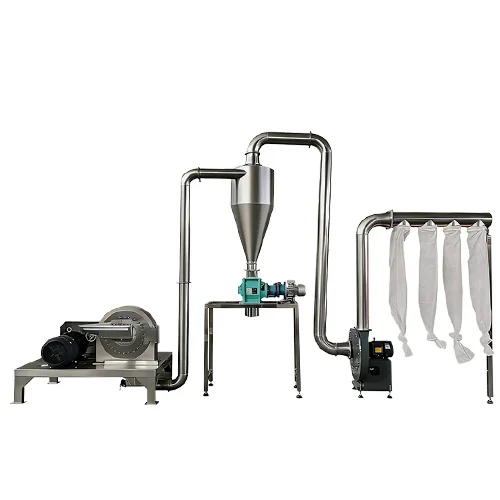
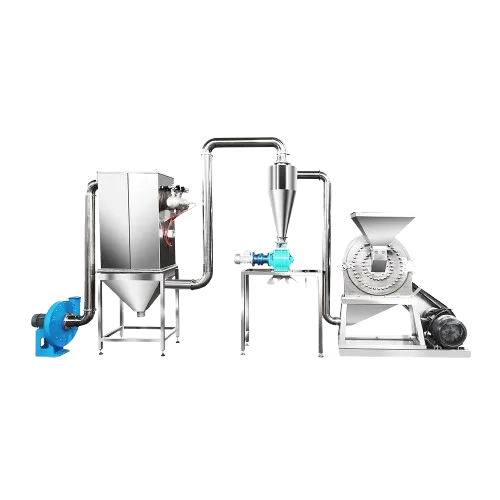
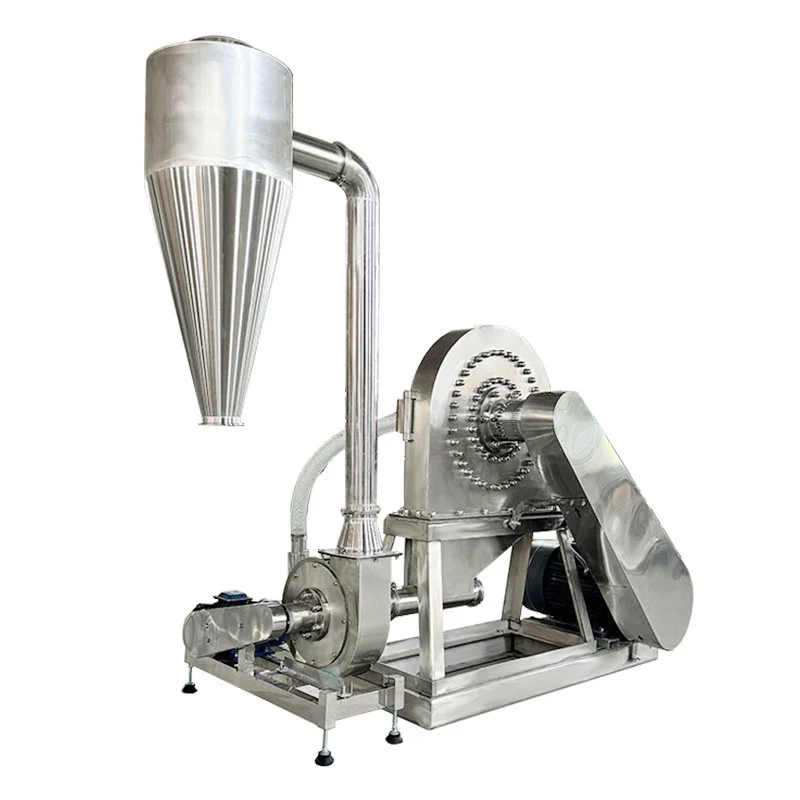
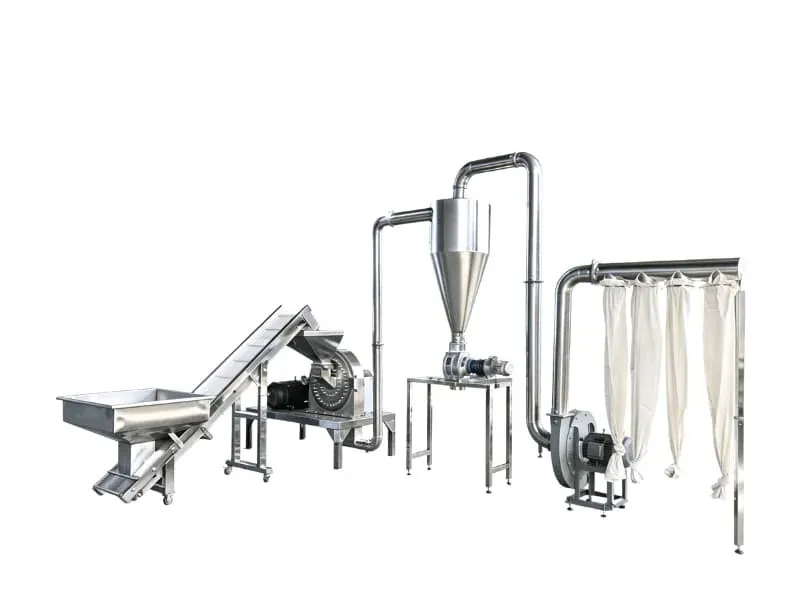
Controlled grinding for consistent powder quality
Impact, cutting and collision pulverizer that produces fine powder with controlled particle distribution.
Uniform feeding and adjustment of the grinding elements balance capacity, fineness and temperature. The equipment can work as a standalone unit or as part of a closed line.
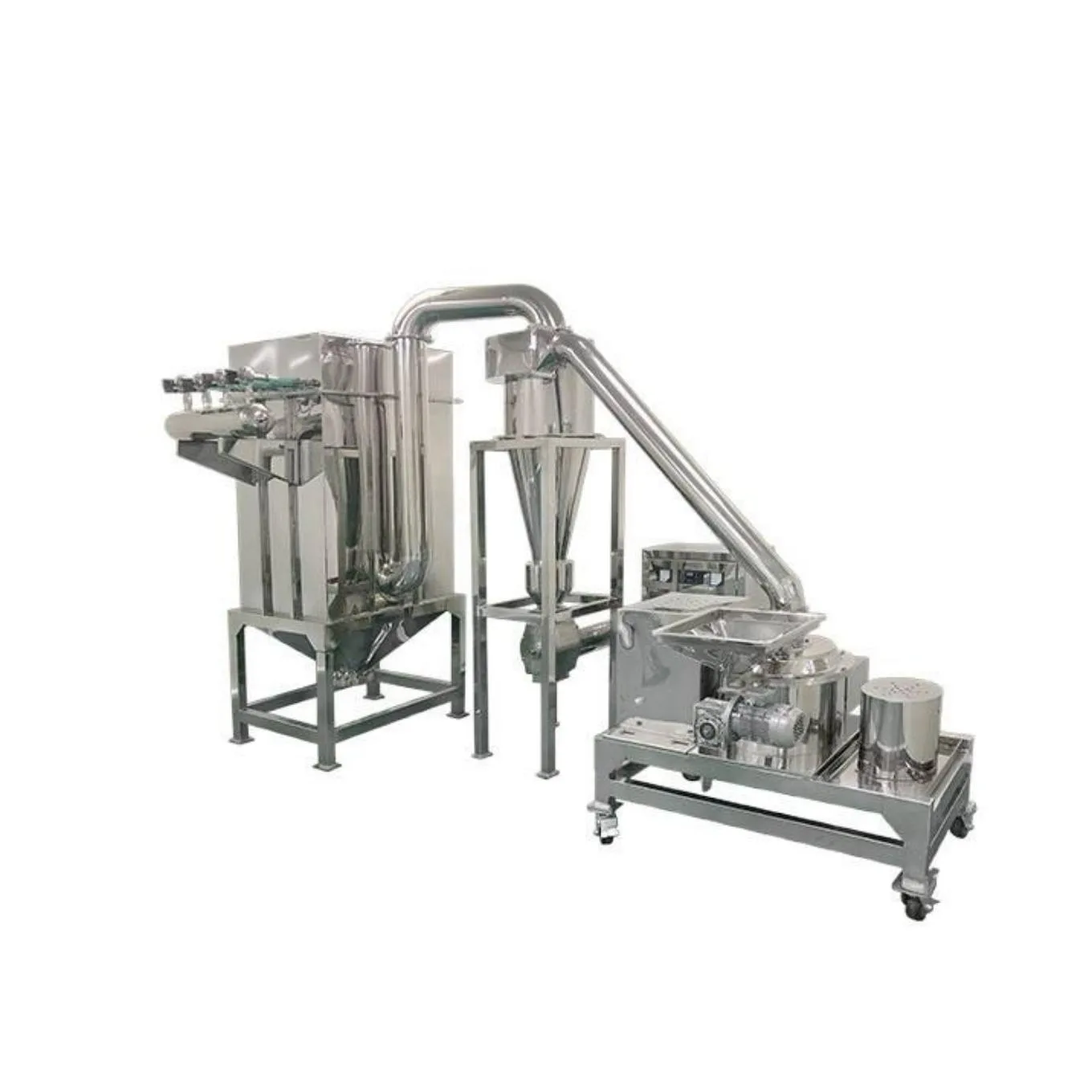
How it integrates into production
Reference specifications
| Indicative capacity | 15–1500 kg/h |
|---|---|
| Feed size | up to 50 mm |
| Fineness | 60–320 mesh |
| Configuration | depending on the material. |
Actual capacity depends on the material properties, particle size, moisture and working conditions.
Recommended applications
- Spices, grains and food
- Herbs and pharmaceuticals
- Chemicals, minerals and dry materials
Data needed to select the model
- Material and bulk density
- Input size and required output
- Capacity per hour or per batch
- Electrical supply and cleaning requirements
Selection and configuration table
| Selection item | Recommended configuration |
|---|---|
| Final fineness | Confirmed by screen, speed or classifier |
| Capacity | Calculated by testing with the material |
| Dust control | Cyclone, bag filter or closed system |
| Contact material | SUS304 or SUS316L optional |
Configuration adapted to your process
We can adjust contact materials, capacity, dimensions, feeding, discharge and auxiliary equipment. Send a sample or process data to confirm the selection.
Request configuration and pricingFrequently asked questions about the Ultrafine Pulverizer
How is the right Ultrafine Pulverizer model selected?
We need to know the material, bulk density, moisture, initial and final size, capacity, working hours and electrical supply. With this data we recommend the model and auxiliary equipment.
Can the Ultrafine Pulverizer be customized?
Fineness and capacity depend on hardness, moisture, feed size and thermal behavior. We recommend validating the material before confirming the model.
What manufacturing materials are available?
We normally offer carbon steel, SUS304 stainless steel and, for more demanding processes, SUS316L. The selection depends on corrosion, hygiene, abrasion and budget.
Is it easy to clean and maintain?
Contact parts can be made of stainless steel with polished surfaces and quick-access openings. The final cleaning method is defined by the product and applicable regulations.
Can it be integrated into an automatic line?
Yes. It can be connected with feeding, conveying, mixing, screening, dust collection, PLC control and packaging according to the production flow.
Can a test be run with my material?
When the project requires it, we recommend a material test to confirm capacity, process results and configuration before manufacturing the final equipment.