
Pepper Grinder for Seasoning Processing: How to Specify Mesh, Capacity and Grinding Temperature
A pepper grinder for seasoning processing is an industrial size-reduction machine that turns whole black, white or green peppercorns into powder or crack at a controlled fineness, commonly 20–40 mesh for butcher crack and 60–100 mesh for seasoning powder, while holding the temperature rise inside the grinding chamber low enough to protect piperine and volatile oil. It is not a scaled-up table mill: it is one station inside a line that also handles dosing, classification, dust collection, blending and packing.
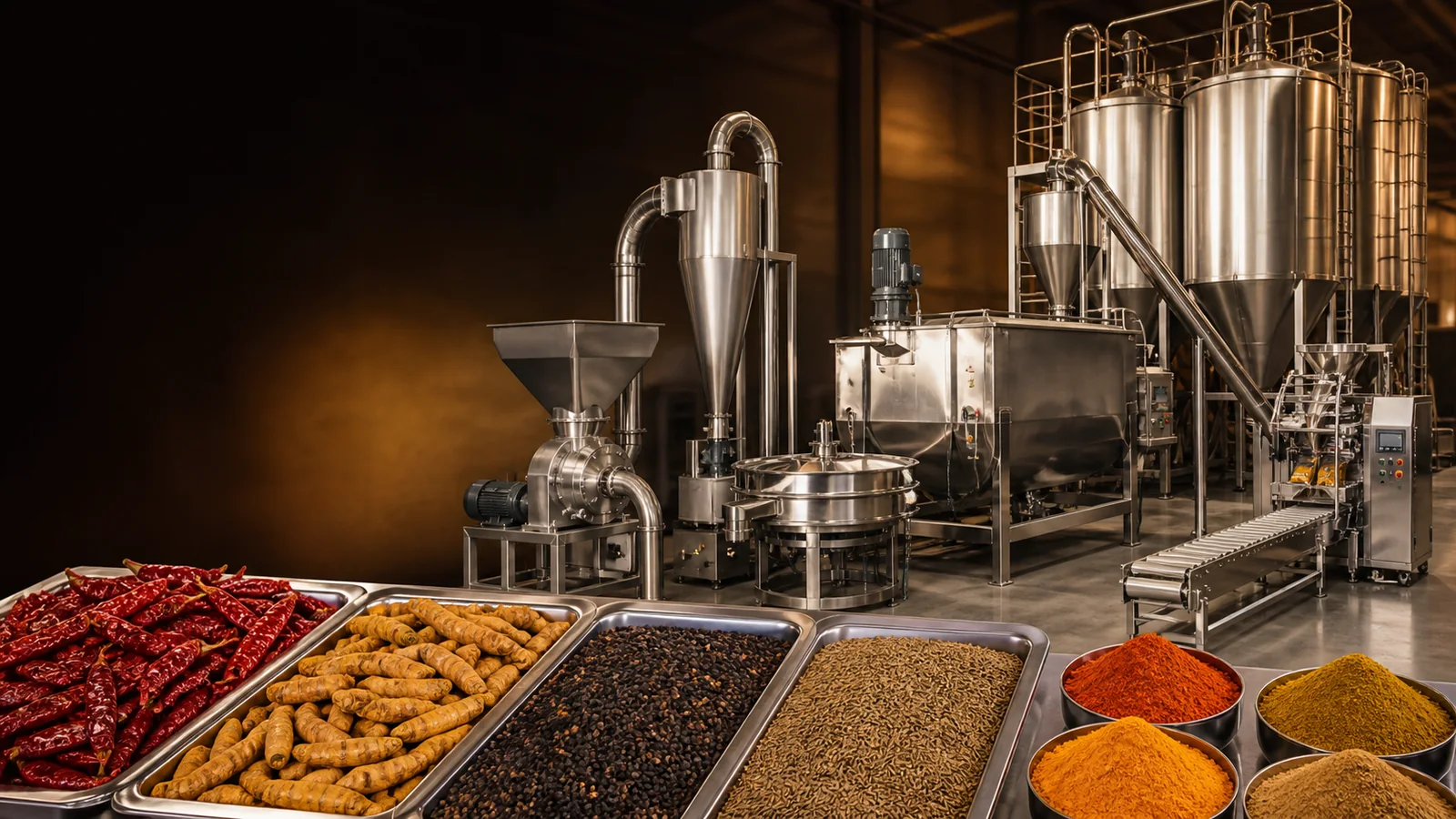
What This Guide Covers, and What It Does Not
This guide is written for seasoning manufacturers, spice packers and food processors specifying roughly 100–2,000 kg/h of pepper grinding capacity for export-grade product. It covers the specifications that must be fixed before an order is placed, the temperature mechanism that decides final product quality, the mill types used on pepper, and the compliance constraints that a grinder cannot solve by itself.
It does not cover hand mills, wet masala grinders or consumer kitchen appliances.
Every numeric range below is referenced to its source in the Data Scope table at the end of this article. Figures marked indicative are supplier- or industry-published ranges, not guarantees, and must be confirmed with a material test on your own pepper before a machine is ordered.
1. What a Seasoning-Processing Pepper Grinder Does That a Kitchen Mill Cannot
Answer capsule. An industrial pepper grinder for seasoning processing performs four functions in one enclosed unit: controlled feeding, size reduction, particle classification and dust containment, at 3–22 kW of installed power and 10–120 mesh of adjustable fineness. A kitchen mill performs only size reduction, at a few grams per minute, with no temperature control and no repeatable sieve specification.
The difference is not capacity. It is controllability. A seasoning factory sells a specification, not a machine: ground black pepper, 60 mesh, piperine at or above 4 percent, volatile oil at or above 1.5 ml/100 g, Salmonella absent in 25 g. A kitchen mill can produce pepper powder; it cannot produce powder that holds that specification across 20 tonnes and four months of shipping.
The four functions, and why each one is a quality variable rather than a convenience:
- Controlled feeding. Pepper must enter the grinding chamber at a steady rate. A starved chamber produces coarse, uneven powder; a flooded chamber raises friction heat and drops throughput. Uniform feeding is the first lever on both fineness repeatability and temperature.
- Size reduction. Impact, shear and inter-particle friction fracture the peppercorn. The mechanism chosen here determines the particle shape and the heat generated per unit of size reduction, not only the final size.
- Classification. Ground pepper is separated by a screen or an air classifier. This is what converts powder into a declared mesh, and it is the stage where oily pepper most often causes downtime.
- Dust containment. Pepper powder is both a loss and a hazard: airborne fines reduce yield, and pepper dust is a recognised respiratory irritant in enclosed workshops. A cyclone or bag-filter stage is part of the machine function, not an accessory.
A fifth function is often overlooked and is treated as a specification in its own right later in this article: heat removal. Temperature is the single variable that most directly moves piperine and volatile oil content, which are the two values EU and US buyers test.
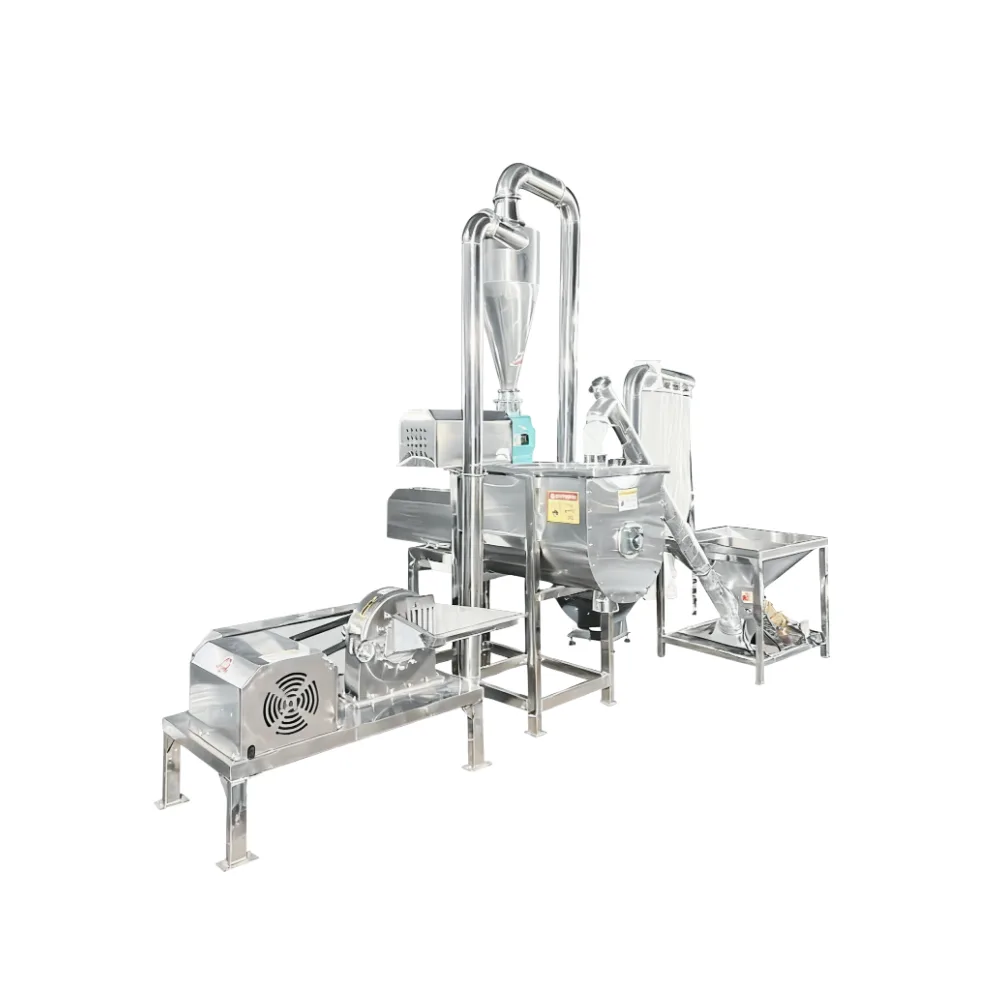
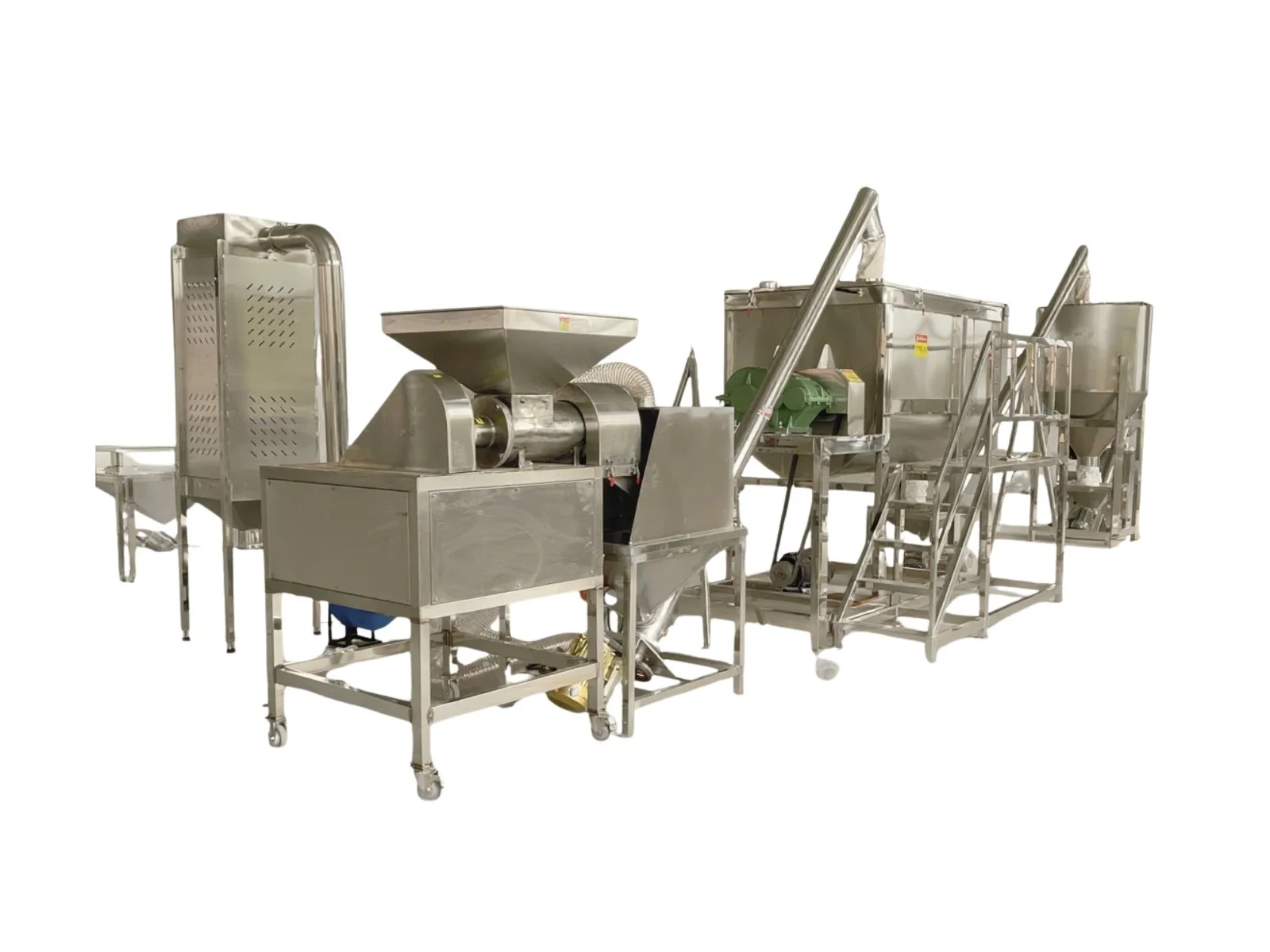
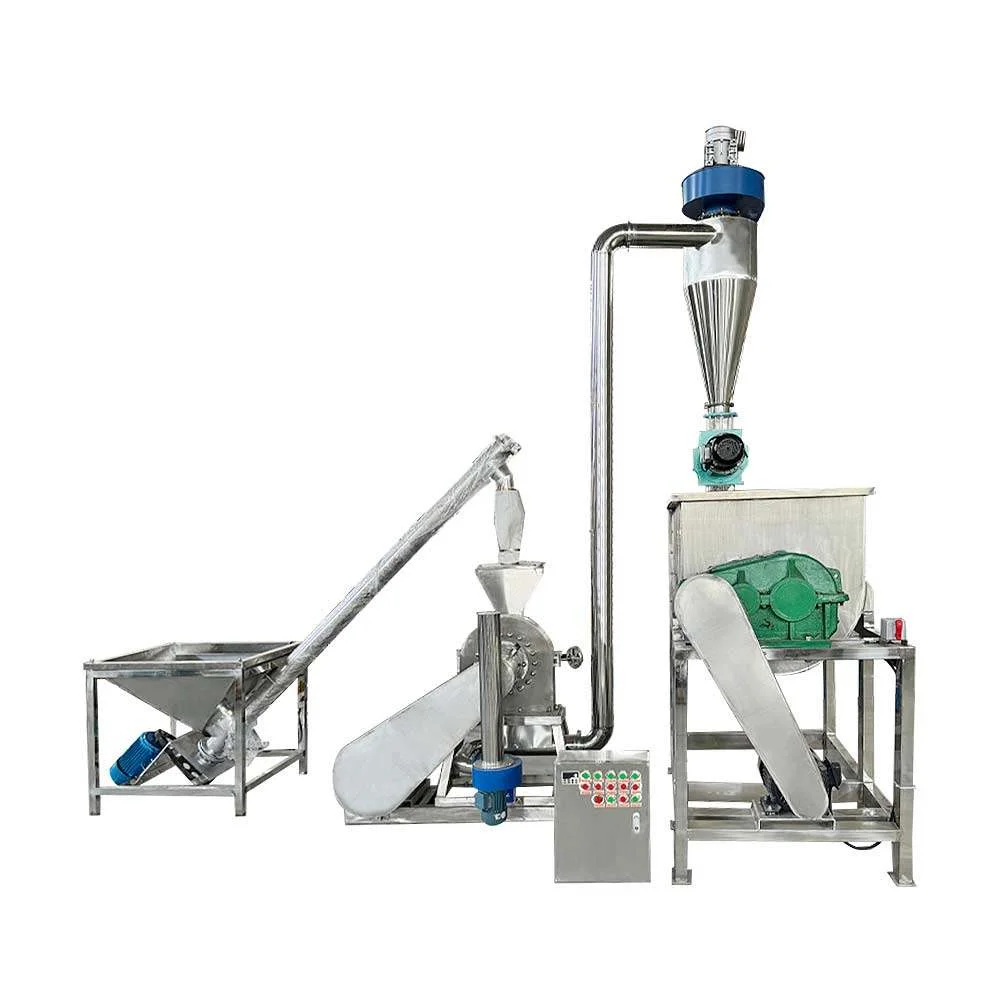
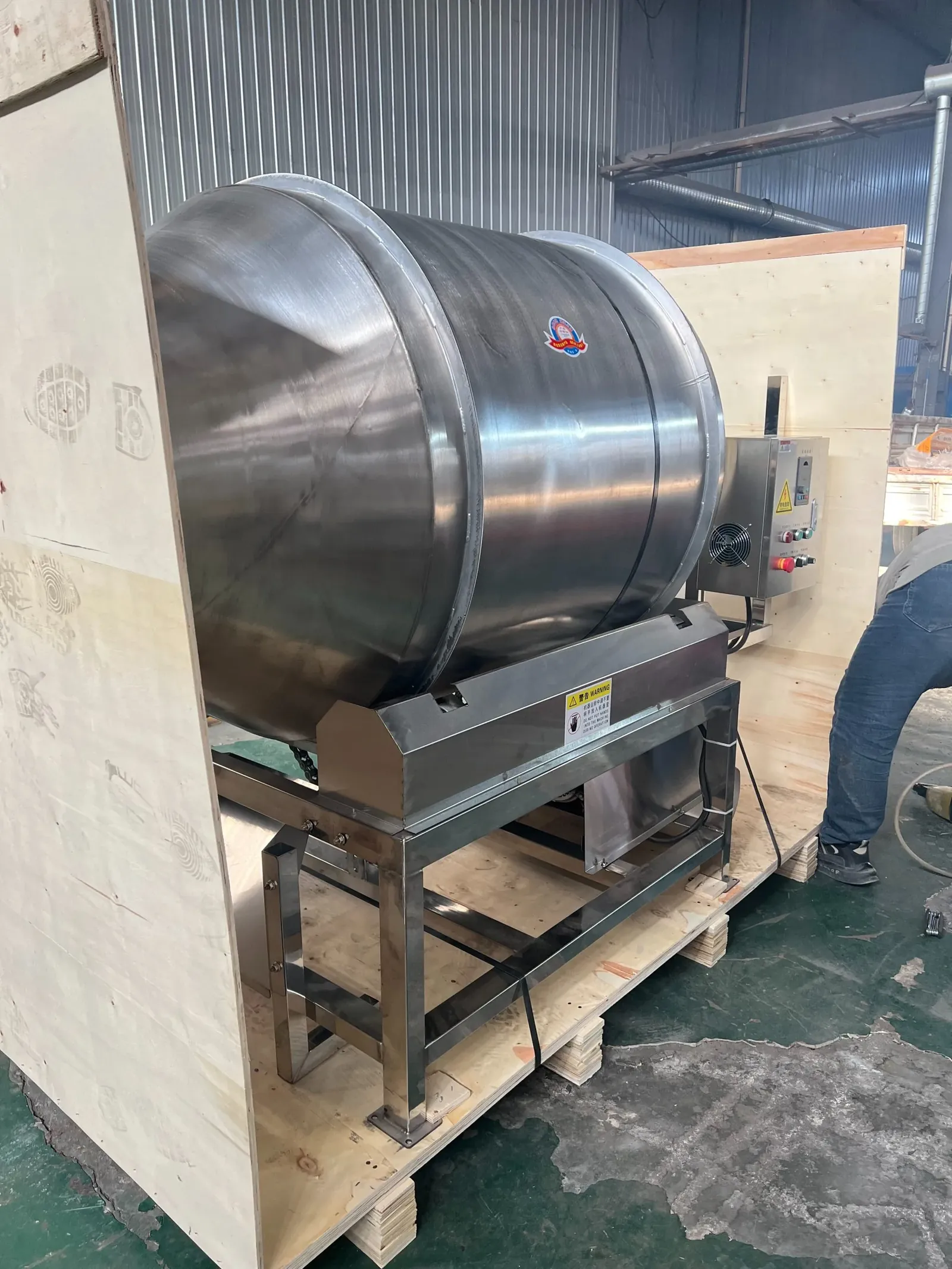
Reference configuration — Industrial Spice Grinder (Pinchuang Machinery). Power 3–22 kW; fineness 10–120 mesh; adjustable speed; contact parts in SUS304 or optional SUS316L; integrable with elevator, cyclone, mixer and silo; series 200–800. Full specification: Industrial Spice Grinder.
2. The Eight Specifications That Decide the Selection
Answer capsule. As of 2026, pepper grinder selection is fixed by eight inputs: target mesh (20–100 mesh), required sustained capacity in kg/h (typically 100–2,000), feed particle size (whole peppercorn, commonly 3–5 mm), incoming moisture (7–10 percent for whole export grade), oil and fibre content, installed power and electrical supply (3–22 kW class), contact-material grade (SUS304 or SUS316L), and dust-control method. Buyers who supply all eight receive a workable quotation; buyers who supply only a request for a pepper grinder receive a default configuration that usually needs rework after commissioning.
The table below is the minimum data set. The third column is the reason each item matters — it is the mechanism, not a formality.
| Specification to fix | Typical range for pepper (indicative) | Why it changes the machine |
|---|---|---|
| Target fineness | 20–40 mesh (crack); 60 mesh (industrial blends); 80–100 mesh (premium retail) | Sets screen mesh, rotor speed and whether an air classifier is needed |
| Capacity | 100–500 kg/h (mid-size packer); 500–2,000 kg/h (industrial line) | Scales chamber volume and motor power; catalogue figures are always material-dependent |
| Feed size | Whole peppercorn, typically 3–5 mm | Determines inlet geometry and whether pre-cracking is required |
| Moisture of incoming pepper | 7–10 percent (whole export grade); 12 percent maximum (ground spec limit) | Above 12 percent, water resists fracture and more of the motor energy converts to heat instead of size reduction |
| Oil and fibre content | Black pepper carries volatile oil and surface oil that become tacky when warm | Drives the choice between screen classification and air classification, and the need for a cooling jacket |
| Power and supply | 3–22 kW installed; confirm 380 V/50 Hz or 440 V/60 Hz, three-phase | Motors, variable-frequency drive and protection class follow the destination grid, not the factory default |
| Contact material | SUS304 standard; SUS316L for aggressive cleaning regimes or high-corrosion environments | Corrosion resistance, cleanability and documentation for food-safety audits |
| Dust control | Cyclone; cyclone plus bag filter; fully closed negative-pressure system | Dust control determines yield retention and workshop compliance |
Two additional items are not machine specifications, but they change the quotation materially. Changeover frequency is how often the line switches between pepper, cumin, chili and blended seasonings, and it drives the demand for quick-disassembly parts and cross-contamination control. Destination-market documentation determines whether hygienic design, surface finish and material certificates must be documented rather than simply present.
3. Mesh Size: Choosing Fineness by Seasoning Application
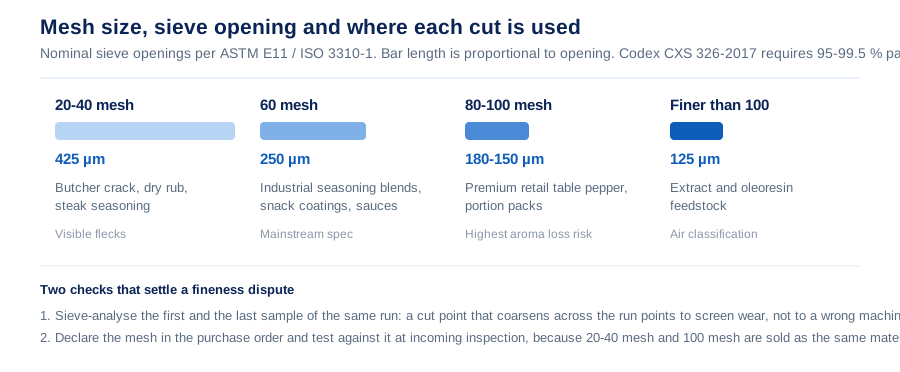
Answer capsule. Ground black pepper is normally milled to 60–100 mesh, with coarse crack at 20–40 mesh for butcher and steak applications and 80–100 mesh for premium consumer packs. The Codex standard for black pepper requires that 95–99.5 percent of ground pepper pass through the declared sieve, so mesh is a compliance threshold, not a marketing preference.
Mesh selection is driven by three real constraints, in this order.
First, the application mouthfeel and dispersion. Coarse crack at 20–40 mesh delivers visible flecks and a slow heat release, which is standard for butcher counters, dry rubs and steak seasoning. Powder at 60 mesh disperses evenly into blends, sauces and snack coatings. Above 80 mesh the pepper dissolves into the matrix and contributes heat and aroma without visible texture.
Second, the buyer incoming-inspection method. Retail and food-service buyers usually verify fineness by sieve analysis against a declared mesh. If the declared value is 60 mesh, the shipment must meet the Codex pass-through requirement of 95–99.5 percent through the specified sieve. A grinder that drifts from 60 to 45 mesh during a run will fail that check even though it still grinds pepper.
Third, shelf behaviour. Finer powder has more exposed surface area, so it loses volatile oil faster and cakes faster in humid conditions. Premium retail packs at 80–100 mesh therefore place a heavier burden on downstream packaging, including moisture-barrier liners and immediate filling, than industrial 60 mesh blends do.
Declared size versus delivered size. The most common specification dispute in pepper grinding is fineness drift across a production run. In impact mills that classify by a perforated screen, progressive screen wear causes the cut point to coarsen as the run proceeds. Screen-based classification should therefore be treated as a wear item with an inspection interval, and air-classification systems are worth evaluating where the declared mesh is tight or where the customer tests every batch.
| Application | Typical mesh | Direction of particle-size control | Notes |
|---|---|---|---|
| Butcher crack, dry rub, steak seasoning | 20–40 mesh | Coarse classification | Visible flecks; low fines generation |
| Industrial seasoning blends, snack coatings, sauces | 60 mesh | Screen or air classifier | The mainstream industrial specification |
| Premium retail table pepper, portion packs | 80–100 mesh | Air classification recommended | Highest aroma loss risk; needs moisture-barrier packing |
| Extract and oleoresin feedstock | Finer than 100 mesh | Air classification | Feeds solvent extraction, not culinary blends |
Reference configuration — classification stage. Pinchuang Machinery industrial spice grinder covers 10–120 mesh with adjustable speed. Where classification must hold a tight declared mesh independent of screen wear, HCZDS vibrating screens (effective diameters 540–1,886 mm, 1–4 decks, screens 2–500 mesh) or LZS linear vibrating screens (1–6 decks, indicative 0.3–10 t/h) are used downstream to close the specification. See Industrial Spice Grinder and Vibrating Screen.
4. Grinding Temperature: The Variable That Sets Piperine and Volatile Oil
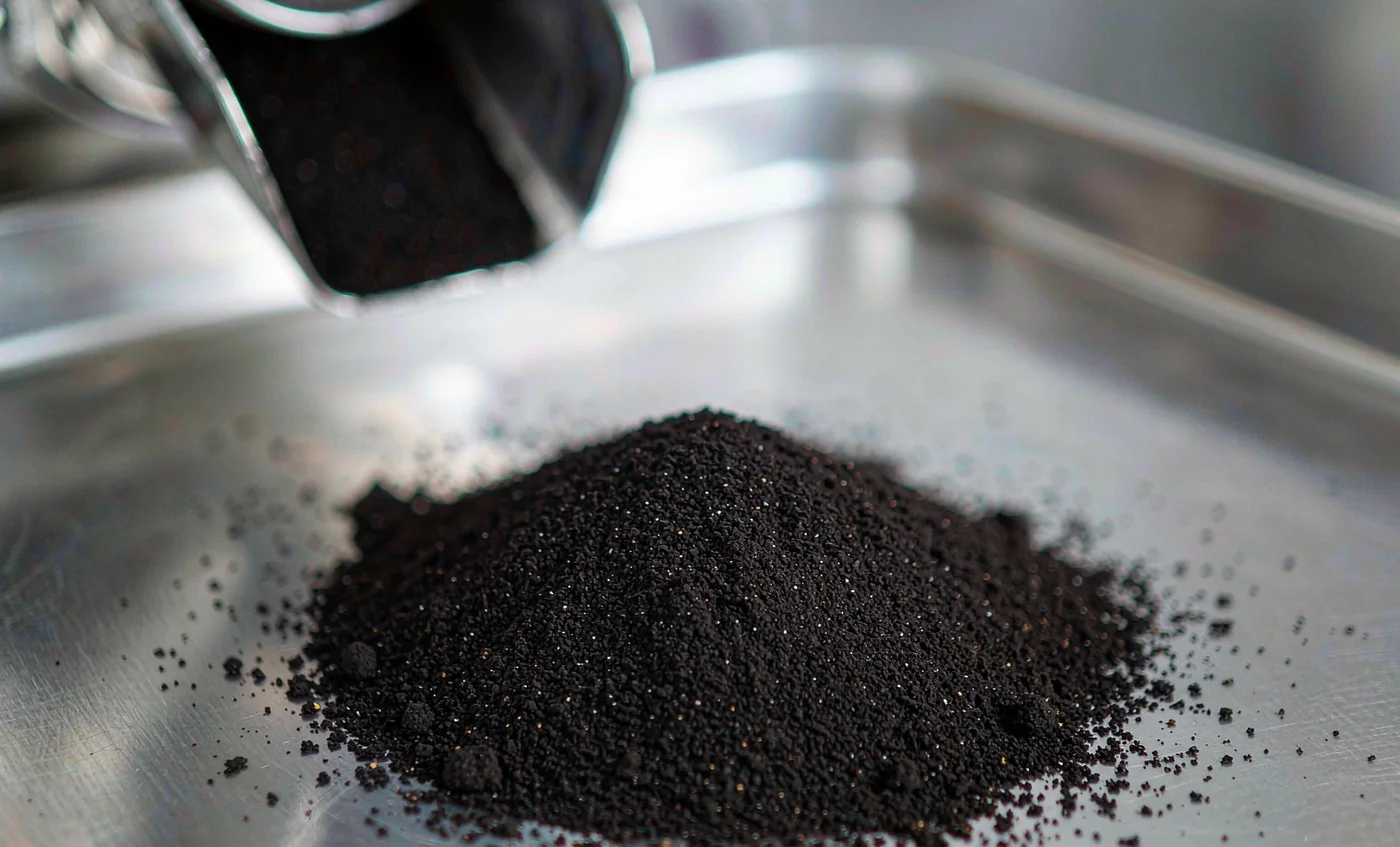
Answer capsule. Grinding temperature is the primary controllable variable affecting piperine and volatile oil content in ground black pepper, because piperine is heat-labile and volatile oil evaporates continuously from freshly milled powder. Codex CXS 326-2017 sets minimums of 3.5 percent piperine on a dry basis and 1.0 ml/100 g volatile oil, and specifies that volatile oil be determined immediately after grinding, which tells you how fast the aroma fraction moves.
This is where the economics of a pepper grinder live. Piperine and volatile oil are not decoration: they are the tested values that determine whether a container clears import inspection, and they are the reason two grinders with identical power ratings can produce powder with materially different commercial value.
The mechanism, in one chain. A grinding chamber converts electrical energy into fracture and into heat. The heat has three exits: it is carried away by airflow, absorbed by cooling surfaces, or accumulated in the material. What accumulates raises the temperature of the peppercorn surface. Above a certain temperature the two commercially important fractions respond differently. Piperine degrades, irreversibly reducing the pungency value that buyers measure by high-performance liquid chromatography. Volatile oil simply leaves: the aroma fraction evaporates into the exhaust airstream and is lost. Volatile oil loss begins immediately, which is why Codex places the measurement point at the mill outlet rather than at the warehouse.
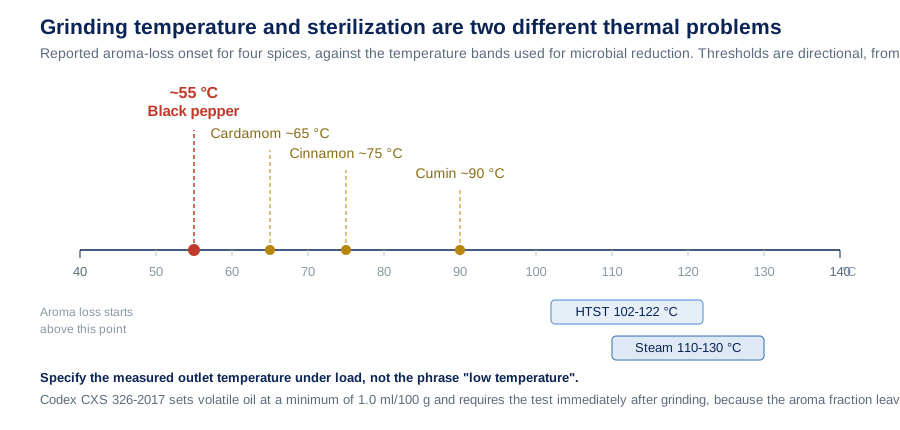
Reported sensitivities, for reference. Published technical sheets for black pepper report piperine content in the 4.0–6.5 percent range, with beta-caryophyllene making up 15–25 percent of the essential oil and limonene 10–18 percent. Consumer-grade grinding tests report that caryophyllene in black pepper evaporates rapidly above roughly 55 degrees Celsius, which places black pepper among the most heat-sensitive spices, ahead of cardamom (reported risk above about 65 degrees), cinnamon (about 75 degrees) and cumin (about 90 degrees). These figures come from different measurement contexts and should be treated as directional, not as a single validated threshold for industrial mills.
Four engineering levers that actually move the number.
| Lever | What it does | Design implication |
|---|---|---|
| Chamber cooling | Removes friction heat before it reaches the product | Circulating water jacket on chamber and/or spindle; on some designs a chilled-air connection |
| Classification without a screen | Eliminates the accumulation zone where warm, oil-tacky powder blinds the mesh and holds heat | Variable-frequency air-classification wheel replacing the mechanical screen |
| Airflow through the chamber | Carries both heat and finished powder out quickly, shortening residence time | Induced-draft fan plus negative-pressure enclosure |
| Residence-time control | Less time in the chamber means less total heat absorbed, even at the same instantaneous temperature | Uniform dosing, correctly sized chamber, avoiding recirculation of oversize material |
A practical note on low-temperature claims. Low-temperature grinding is a design objective, not a temperature. Before accepting the claim, ask for the measured grinding-chamber outlet temperature under load with your material, at your target mesh and your feed moisture. A machine can be described as low-temperature and still be unsuitable for black pepper if it is being run outside its rated feed rate.
Sterilization temperature is a different calculation. Full HTST (high-temperature short-time) sterilization of black pepper is commonly run at 102–122 degrees Celsius, and industry technical guidance notes that black pepper composition and colour are comparatively stable at those treatment temperatures, unlike heat-sensitive green herbs. Steam sterilization of spices is typically carried out at 110–130 degrees Celsius, most often 121–125 degrees. Reported piperine retention after steam treatment at 105 degrees for 15 minutes is 92–95 percent, versus 98 percent or more for irradiation at 8 kGy and about 90 percent for ozone at 10 ppm for 30 minutes.
The lesson for grinder specification is a sequencing question. Treating pepper with heat and then grinding it adds a second thermal event. The order of operations, sterilize-then-grind versus grind-then-sterilize, is a quality decision that must be made before the line layout is drawn, not after.
5. Capacity and Power: Sizing the Mill to the Line, Not to the Catalogue
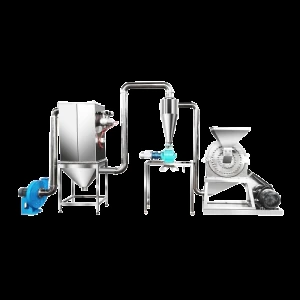
Answer capsule. As of 2026, published machine capacities for pepper grinding span roughly 10–50 kg/h at 2.2–4 kW up to 500–1,500 kg/h at 18.5 kW, and Pinchuang Machinery industrial spice grinder is configured across 3–22 kW depending on capacity and fineness. Catalogue capacity is measured on a favourable reference material, so the usable figure for your pepper should be established by test, not by datasheet comparison.
Three factors routinely reduce delivered capacity below the published number.
- Feed moisture above specification. Moist pepper resists fracture and increases the energy that becomes heat, so throughput falls exactly when temperature is hardest to control. Verifying incoming moisture is a capacity-management step, not only a quality step.
- Finer target mesh. Going from 60 mesh to 100 mesh reduces throughput because more material must be recirculated or held longer in the classification zone.
- Oily, fibre-rich material. Pepper surface oil makes particles tacky once warm, which is precisely the condition that blinds screens and forces cleaning stops. A grinder that runs 500 kg/h on dry, free-flowing material may hold a lower sustainable rate on pepper.
Sizing rule of practice. Specify the sustained rate your line must hold in the worst week of the year, which is the order-book peak rather than the average, and then confirm the machine holds that rate on your pepper at your mesh with your moisture. Where the line must also handle a second spice with different thermal behaviour, size for the harder material and control the setpoint per recipe.
| Line scale (indicative) | Grinding duty | Typical installed power class | Downstream implication |
|---|---|---|---|
| Micro and specialty packer | 10–50 kg/h | about 2.2–4 kW | Manual or semi-automatic feeding and filling |
| Mid-size seasoning blender | 100–500 kg/h | about 7.5–15 kW | Dosing feeder, cyclone, screen, batch mixer |
| Industrial seasoning line | 500–1,500 kg/h | about 15–22 kW and above | Full closed line with conveying, silo, automatic filling |
Published equipment in this class, for reference: commercial spice grinders in the 10–50 kg/h band are commonly listed at 2.2 kW, the 50–300 kg/h band at 7.5 kW, the 70–400 kg/h band at 11 kW and the 100–500 kg/h band at 15 kW; larger 500–1,500 kg/h units are listed at 18.5 kW. Pin mill and turbine-type pepper mills in the same size classes are quoted with capacities from roughly 20–50 kg/h to 200–1,000 kg/h with crush sizes from 12 to 320 mesh. These are catalogue-class figures from different manufacturers and are indicative. They are not a substitute for a test.
6. Mill Type Comparison: Which Grinding Mechanism Suits Pepper
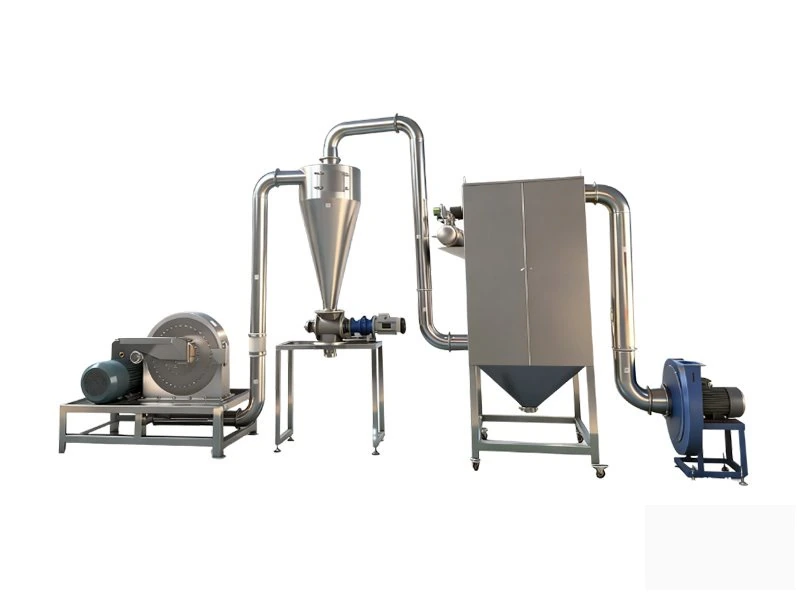
Answer capsule. As of 2026, four grinding mechanisms are used on pepper: blade and cutting, toothed-disc (pin or claw), hammer and impact, and air-classified turbine or ultrafine. They trade particle shape, heat generation, achievable fineness and tolerance of oil against each other. For export-grade seasoning powder at 60–100 mesh, an air-classified or toothed-disc mill with chamber cooling is the most defensible choice; a simple blade mill suits crack and coarse granulation, not declared fine mesh.
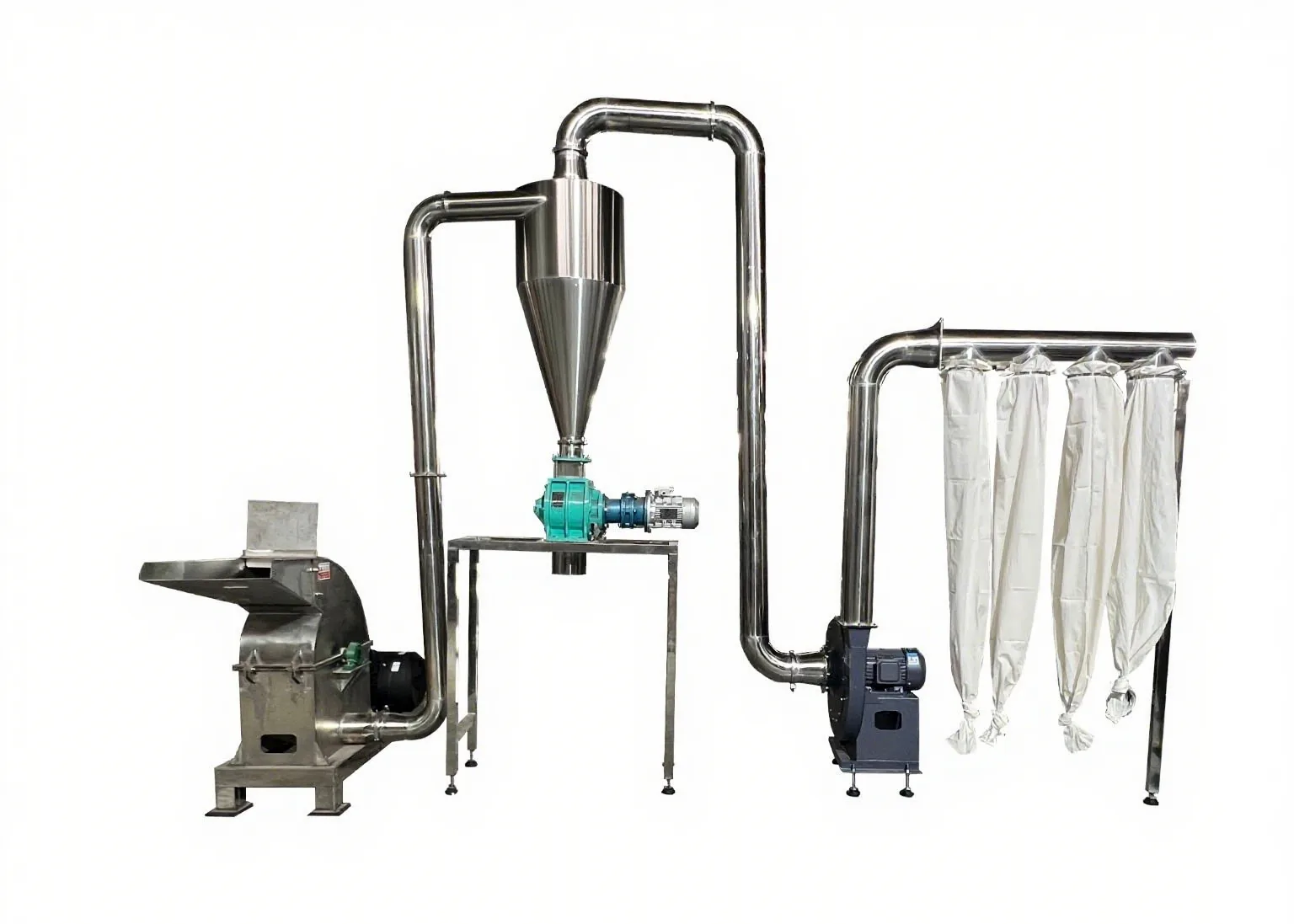
The comparison is about mechanism, not brand.
| Mechanism | Particle result | Heat behaviour | Screen blindness risk on oily pepper | Best fit for pepper |
|---|---|---|---|---|
| Blade and cutting | Irregular, wider distribution | Moderate; cutting generates less friction heat than pure impact | Moderate | Crack, coarse granulation, small-batch operations |
| Toothed disc and pin mill | Narrow, controllable | Higher but predictable; responds well to cooling | High unless airflow is designed in | Fine, uniform powder; food, chemical and pharmaceutical use |
| Hammer and impact | Broad distribution, higher fines | High; energy converts to heat as much as fracture | High | Pre-cracking, robust duty where tight mesh is not required |
| Turbine and air-classified ultrafine | Narrow, very fine (300–400 mesh class) | Lowest accumulated heat, because the screen is replaced by air classification | Lowest; the failure mode is designed out | Premium finer-mesh pepper, high-oil spices, extract feedstock |
Two engineering points decide the outcome more often than the mechanism label.
First, whether classification is by screen or by air. A screen is the natural place for warm, oil-tacky pepper to accumulate and block. Air classification removes that accumulation point and reduces the need to stop and clean, which is why it is favoured for high-oil spices.
Second, whether the chamber is cooled and how well it is sealed. A labyrinth or equivalent seal keeps powder in and air out; a cooling jacket removes heat at the source. Sealing and cooling are what make a mechanism thermal behaviour acceptable rather than merely characteristic.
Reference configuration — mechanism options. Pinchuang Machinery builds pin mills for fine, uniform grinding of food, chemical and pharmaceutical products; ultrafine pulverizers using impact, cutting and collision with controlled particle distribution; enclosed claw pulverizers with dust containment; and powder milling machines for continuous grinding of grains, spices, herbs and chemicals. The Industrial Spice Grinder is the pepper-specific configuration, covering 10–120 mesh with adjustable speed and optional line integration. Compare mechanisms on the product range or view the pepper configuration at Industrial Spice Grinder.
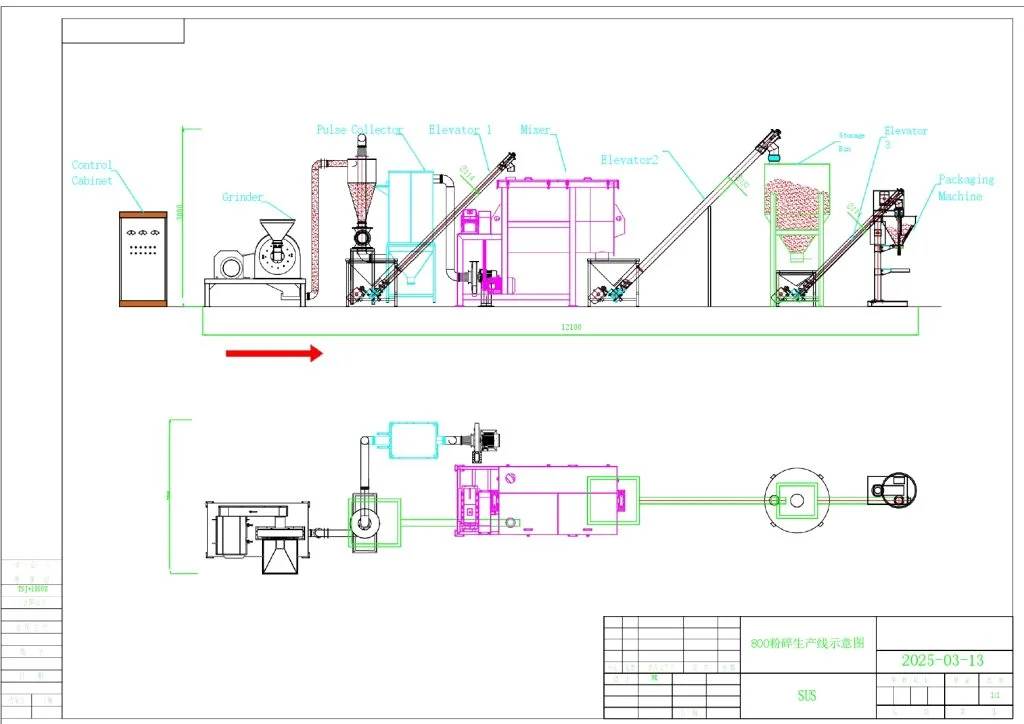
7. A Complete Pepper and Seasoning Line: Six Stages
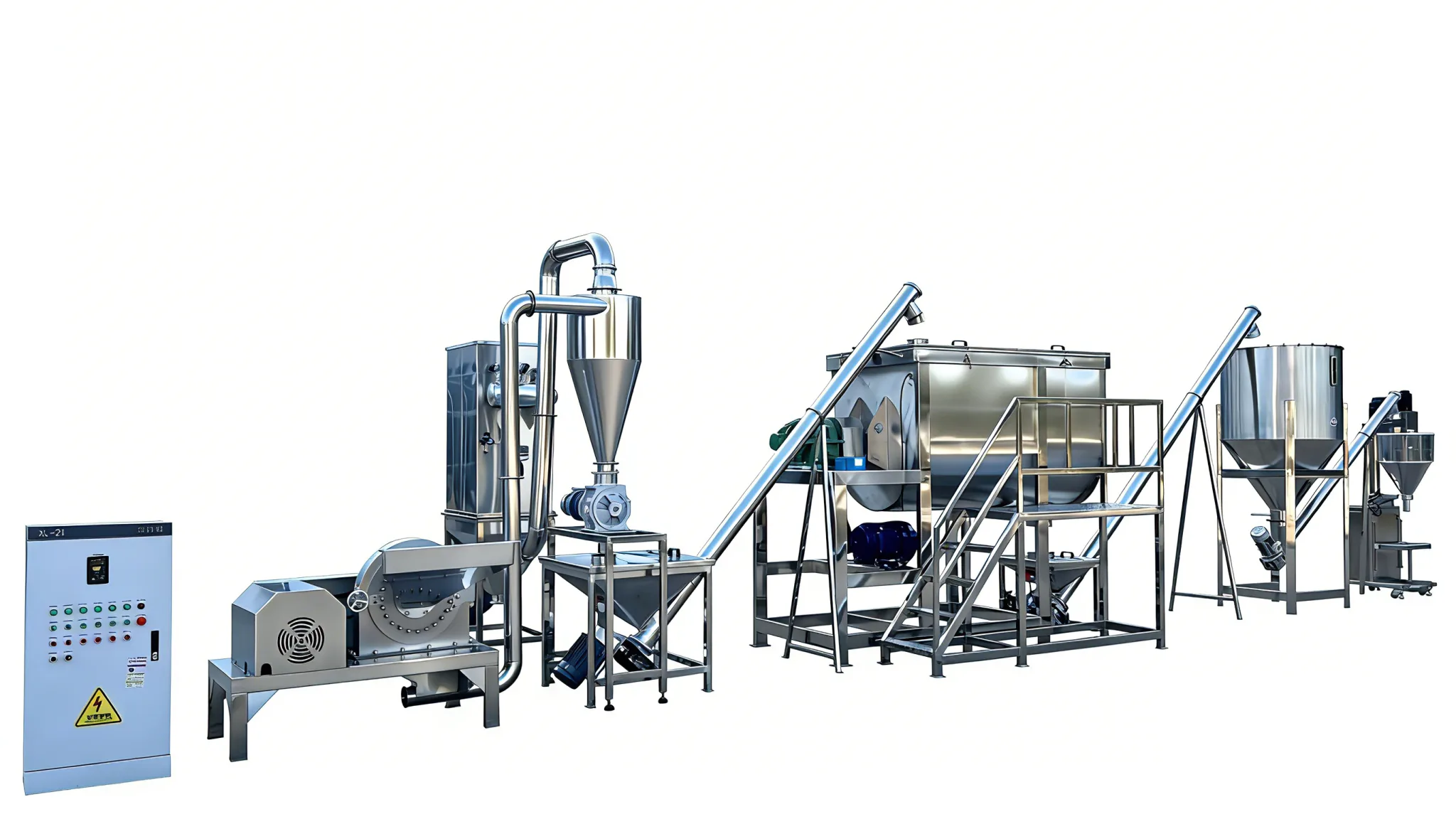
Answer capsule. As of 2026, a pepper and seasoning processing line has six stages: intake and foreign-material removal, size grading, sterilization, grinding, classification, and blending and packing. The grinder is one stage among six. Lines of this type are specified by the stage that limits throughput, so a grinder upgrade without a matching classification or filling stage simply moves the bottleneck.
| Stage | Function | Quality variable controlled | Equipment class |
|---|---|---|---|
| 1. Intake and cleaning | Remove stones, metal, dust and foreign matter | Physical cleanliness; protects downstream optical equipment | Destoner, magnetic separator, aspirator |
| 2. Size grading and colour sorting | Separate premium grades; remove light berries, pinheads and discoloured berries | Piperine value of the finished powder, which immature berries dilute | Vibratory grading screen, optical sorter |
| 3. Sterilization | Reduce microbial load before or after grinding | Salmonella absence and total plate count | Steam or heat treatment system, external to the grinder |
| 4. Grinding | Size reduction to declared mesh | Fineness, temperature rise, piperine and volatile oil retention | Industrial spice grinder, 3–22 kW |
| 5. Classification | Separate by sieve or air to declared mesh | Delivered mesh versus declared mesh; fines control | Vibrating screen or air classifier |
| 6. Blending and packing | Homogenise blends; dose and seal | Blend uniformity; moisture pickup and aroma loss after milling | Ribbon mixer; auger or double-auger filler; automatic packaging machine |
Two auxiliary functions complete the line and are frequently under-specified.
Enclosed conveying. Bucket elevators and screw conveyors move material between stages. A closed conveying system prevents the recontamination and moisture pickup that open transfer points allow after sterilization.
Temporary storage. Storage silos of 2–20 cubic metres, in carbon steel, SUS304 or SUS316L, buffer between grinding and blending so that the mill runs at a steady rate rather than being started and stopped with the packing schedule. Steady running is also a temperature-control measure.
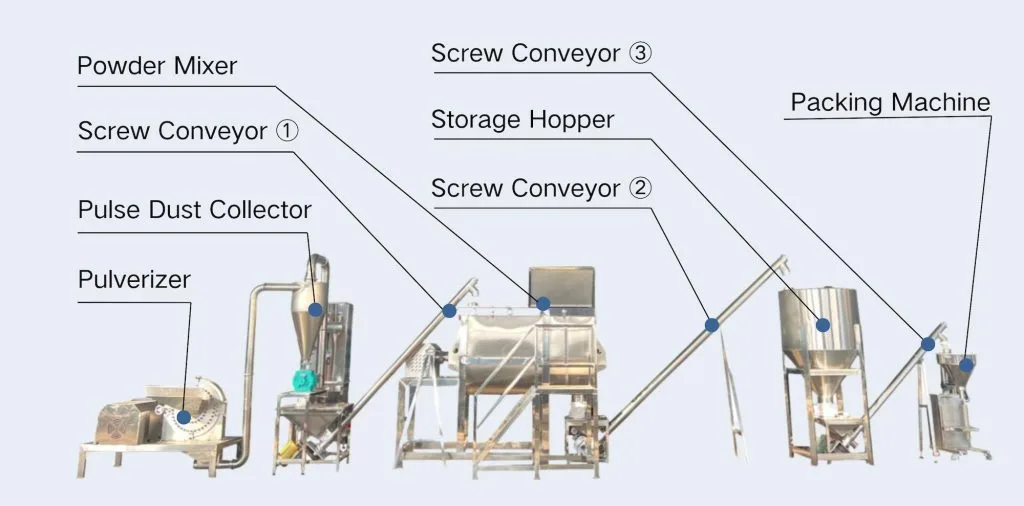
Reference configuration — line integration. Pinchuang Machinery configures grinding equipment with dosing feeders, elevators, screw conveyors, sieve or rotary-drum screens, ribbon mixers, storage silos and auger or double-auger fillers, as either a standalone unit or a closed line. See the spice processing line or the full product range.
8. Microbial and Regulatory Compliance: Where the Grinder Fits, and Where It Does Not
Answer capsule. A grinder does not sterilize. Pepper grinding is a physical process that reduces particle size; it does not remove Salmonella, and the EU requires Salmonella to be absent in 25 g of spices under Regulation (EC) No 2073/2005. Grinding equipment contributes to compliance through hygienic design, cleanability and dust containment, not through microbial reduction.
This distinction matters because buyers frequently specify a grinder with the expectation that it will solve a microbial problem. Regulatory reality in 2026 is as follows.
Salmonella is a zero-tolerance item. Both the EU and US authorities maintain absence-of-Salmonella requirements for spices. The EU microbiological criteria regulation requires absence in 25 g. The US framework requires a validated pathogen reduction step, commonly described as a 5-log reduction, with the method left more open but the result strictly enforced.
Ethylene oxide is effectively off the table for EU-bound spice. Ethylene oxide has been prohibited in the EU as a pesticide and fumigant since 1991, with maximum residue limits of 0.02–0.1 mg/kg covering ethylene oxide and its metabolite 2-chloroethanol in food. It is classified as a probable human carcinogen (IARC Group 2A). The Centre for the Promotion of Imports from developing countries, a Netherlands government agency, advises EU-oriented suppliers to consider heat treatment instead of ethylene oxide fumigation. Heat sterilization is described as natural, chemical-free and radiation-free, and is preferred by European buyers.
Indian spice exports illustrate the commercial size of the risk. Between 2019 and 2024 the EU flagged more than 400 Indian food and spice products for contaminants, with 276 border refusals, primarily for ethylene oxide residues. In 2026 the All India Spices Exporters Forum and the European Spice Association signed a two-year memorandum that explicitly condemns the use of sterilization methods banned in the EU, naming ethylene oxide, for Indian spice shipments bound for Europe.
Border control frequency is becoming data-driven. Regulation (EU) 2026/1206, reported to take effect in June 2026, revises how frequently certain food and feed products face official import controls, with inspection frequency set from real-time safety data rather than a fixed percentage. This specific instrument should be confirmed against EUR-Lex before it is cited in customer-facing material.
Other contaminant limits apply to the same shipments. Microbiological absence is not the only barrier. Maximum levels for pyrrolizidine alkaloids under Commission Regulation (EU) 2023/915 are 400 micrograms per kilogram for cumin seed and most dried herbs, and 1,000 micrograms per kilogram for borage, lovage, marjoram, oregano and mixtures of these. Spice-borne contamination in the EU RASFF alert database was driven in 2025 by Salmonella, at 6 percent of 279 reported issues, and by mycotoxins at about 10 percent of issues.
What this means for equipment specification. Because grinding cannot fix microbiology, the grinder contribution to compliance is limited to four verifiable design properties: hygienic construction (stainless contact parts, smooth surfaces, no crevices or dead zones), cleanability (quick-access openings and removable contact parts so allergen and spice changeover cleaning can actually be done), containment (negative-pressure dust control so fines do not migrate back into the product stream or the workshop), and documentation (material certificates and surface-finish records that survive a customer audit). These are specification items you can write into a purchase order; sterilizing capability is not.
Boundary statement. Equipment suppliers provide machinery and material documentation. They do not certify a shipment microbiology, and they do not issue the certificates of analysis that border authorities require. Batch-level certificates from an accredited laboratory, covering Salmonella, total plate count, moisture, piperine and volatile oil, remain the responsibility of the processor and exporter.
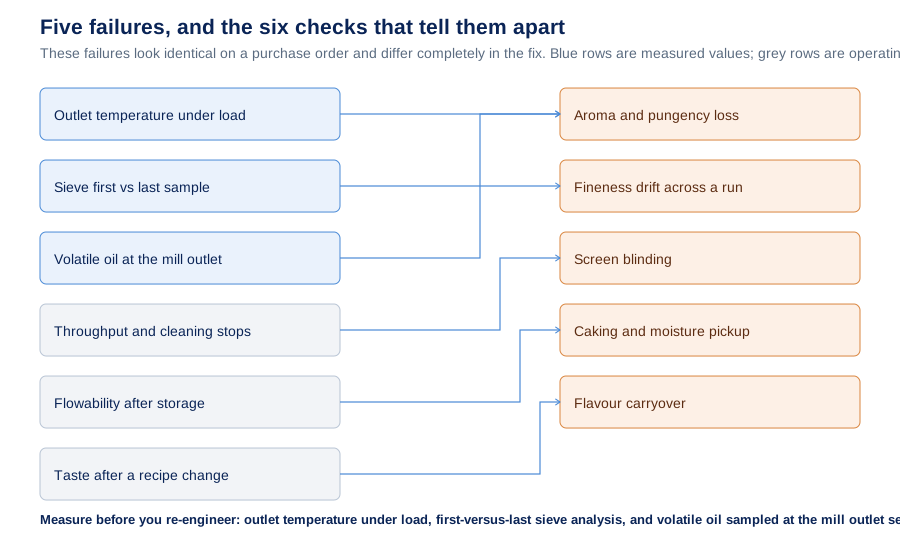
9. Five Failure Modes That Appear After Installation
Answer capsule. As of 2026, five failures account for most recorded pepper grinding downtime in seasoning plants: screen blinding from oil-tacky powder, discoloured or flat powder from excessive chamber temperature, fineness drift as screens wear, caking from moisture pickup after milling, and flavour carryover from incomplete cleaning between spice changes. Each has a characteristic signal, a specific cause and a design-level fix.
| Failure | Signal you will see | Mechanism | Design-level fix |
|---|---|---|---|
| Screen blinding | Throughput falls; fine powder output drops; frequent manual cleaning stops | Warm pepper oils become tacky and adhere to the perforated screen instead of passing through | Air classification instead of a mechanical screen; chamber cooling; induced-draft airflow; negative-pressure enclosure |
| Aroma and pungency loss | Powder tests below specification on piperine or volatile oil; colour dulls | Heat degrades piperine and drives volatile oil into the exhaust; long residence time compounds it | Cooling jacket on chamber and spindle; shorter residence time; sample volatile oil at the mill outlet, not in the warehouse |
| Fineness drift | Early batches pass sieve analysis; later batches coarsen | Progressive screen wear raises the effective cut point across a long run | Screen treated as a wear item with a replacement interval; air-classifier designs remove the wear dependency |
| Caking and moisture pickup | Powder sets in storage; flowability drops; shelf life shortens | Ground pepper has high surface area and absorbs moisture after milling; humid workshop air accelerates it | Immediate closed transfer after milling; moisture-barrier liners; storage in covered silos rather than open bins |
| Flavour carryover | A pepper batch tastes of cumin or chili | Product remains in crevices, screen frames and discharge chutes between recipes | Quick-disassembly contact parts; polished stainless surfaces; documented cleaning procedure tied to recipe changeover |
A note on diagnosis order. These failures look similar from the purchase order and differ completely in the fix. Before changing equipment, establish which one is occurring: measure outlet temperature under load, sieve-analyse the first and last samples of a run, and test volatile oil immediately after milling. The measurement decides the fix.
10. How to Specify and Verify: Data to Send, Tests to Run
Answer capsule. A pepper grinder quotation is only as good as the process data behind it. As of 2026, six inputs are mandatory: material and bulk density, feed and target particle size, required capacity per hour or per shift, feed moisture and oil content, electrical supply, and cleaning requirements. The configuration should then be confirmed by grinding a sample of your own pepper before the machine is manufactured.
Data to send with an enquiry. Material, specifying black, white or green pepper, single-origin or blend; bulk density; feed size; target mesh; required sustained capacity; feed moisture; electrical supply and frequency; contact-material requirement; cleaning and changeover regime; hours of operation per day; destination market and any documentation the customer auditor requires.
Acceptance tests to run on the delivered machine. These are the tests that convert a description into a specification.
| Test | Method | Pass criterion to write into the purchase order |
|---|---|---|
| Sieve analysis | Mechanical or air-jet sieve on samples taken at start, middle and end of a full run | Declared pass-through percentage achieved across the whole run, not just at start-up |
| Piperine content | High-performance liquid chromatography on finished powder, dry basis | Meets the declared minimum for the grade sold |
| Volatile oil | Distillation on a sample taken at the mill outlet, immediately after grinding | Meets the declared minimum when measured at the specified point and time |
| Moisture | Loss-on-drying on incoming pepper and finished powder | Incoming within the specified band; finished within the declared limit |
| Temperature log | Chamber outlet temperature recorded under rated load | Stays within the validated band at rated capacity, mesh and feed moisture |
Boundary statement. Pinchuang Machinery published ranges, for example 3–22 kW and 10–120 mesh on the industrial spice grinder, are reference configurations, not a performance guarantee for an untested material. Actual capacity depends on material properties, particle size, moisture and working conditions. Where the project requires it, a material test on your pepper is the step that confirms capacity, process results and configuration before manufacturing.
11. What Drives the Price of a Pepper Grinder, and What It Earns
Answer capsule. As of 2026, pepper grinder pricing is driven by capacity class, contact-material grade, cooling design, dust-control configuration, drive and control specification, and integration scope, not by the mill mechanism alone. The return is realised in three measurable places: reduced aroma-driven yield loss, fewer cleaning and downtime stops, and compliance with the declared mesh and chemistry specification that determines whether a shipment clears import inspection.
Cost drivers, in the order they move a quotation. Capacity class and drive motor power and chamber size scale the price directly, and variable-frequency control adds cost while adding fineness repeatability. Contact material: SUS304 is standard, SUS316L raises cost and is specified where the cleaning regime is aggressive or the product is corrosive. Cooling design: a chamber cooling jacket, and on some designs a cooled spindle, raises cost and is the item most often deleted in a budget version of a pepper specification; it is also the item most often re-added after the first failed volatile oil test. Dust control: cyclone only, versus cyclone plus bag filter, versus a fully closed negative-pressure system. Integration scope: a standalone unit, versus a configured line with dosing feeder, conveying, screening, silo, mixing and automatic filling. Documentation and compliance scope: material certificates, surface-finish records and inspection documentation for customer audits.
Where the return shows up. Ground pepper value is concentrated in the fractions that heat destroys. A grinder that holds its declared mesh and preserves piperine and volatile oil protects three things at once: the price the powder commands, the pass rate at incoming inspection, and the yield per tonne of raw pepper.
Raw pepper is a volatile input. The International Pepper Community reported global production of about 530,426 tonnes for 2026 against consumption of roughly 735,878 tonnes including drawdown of stocks, with Vietnam accounting for an estimated 35–40 percent of world output and exporting 85–90 percent of its own production, according to published 2026 market reporting. In a tight-supply year, a percentage point of grinding yield is worth more than in a surplus one.
Boundary statement. Equipment configuration affects process outcomes, not market prices. This section describes cost structure and where value is realised. It does not forecast pepper prices, and no equipment supplier should be asked to guarantee a finished-product price or a regulatory outcome.
Frequently Asked Questions
What is a pepper grinder for seasoning processing?
A pepper grinder for seasoning processing is an industrial machine that reduces whole peppercorns to powder or crack at a declared fineness, typically 20–40 mesh for crack and 60–100 mesh for seasoning powder. It performs controlled feeding, size reduction, particle classification and dust containment in one enclosed unit, and it is installed as one stage of a line rather than used as a standalone appliance.
How do I choose the right mesh for ground black pepper?
Choose mesh from the application, then verify it is achievable within the Codex pass-through requirement of 95–99.5 percent. Use 20–40 mesh for butcher crack and dry rubs, 60 mesh for industrial seasoning blends and snack coatings, and 80–100 mesh for premium retail packs. Finer powder carries more exposed surface area, so it loses volatile oil faster and needs moisture-barrier packing.
Does grinding pepper damage its aroma and pungency?
Yes, if the grinding chamber runs hot. Piperine is heat-labile and volatile oil evaporates continuously from freshly milled powder, which is why the Codex standard requires volatile oil to be determined immediately after grinding. Reported piperine sensitivity and published industrial practice both point to temperature control, through chamber cooling, airflow and short residence time, as the controllable variables rather than the grinding mechanism alone.
What is the difference between screen classification and air classification?
Screen classification separates powder by forcing it through a perforated mesh, which is simple and accurate when new but drifts coarser as the screen wears and blocks when warm pepper oil makes particles tacky. Air classification separates particles by an adjustable airflow or variable-frequency classifying wheel, removing the accumulation point where oily pepper blinds a mesh. Air classification is generally preferred for high-oil spices and for a tight declared mesh.
Can a pepper grinder sterilize pepper or remove Salmonella?
No. Grinding is a physical size-reduction process and does not reduce microbial load. The EU requires Salmonella to be absent in 25 g of spices under Regulation (EC) No 2073/2005, and the US framework requires a validated pathogen-reduction step, commonly a 5-log reduction, delivered by a separate heat or steam treatment stage. A grinder supports compliance only through hygienic design, cleanability, containment and documentation.
Is ethylene oxide still used to treat pepper?
Ethylene oxide has been prohibited in the EU as a pesticide and fumigant since 1991, with maximum residue limits of 0.02–0.1 mg/kg covering ethylene oxide and its metabolite 2-chloroethanol, and it is classified by IARC as a probable human carcinogen (Group 2A). The US framework is more flexible on method but enforces the microbial result. Heat and steam sterilization are the chemical-free alternatives most often specified for EU-bound spice.
What capacity and power do I need for a seasoning factory?
Sizing depends on sustained rate, not average rate. Roughly 2.2–4 kW covers 10–50 kg/h, 7.5–15 kW covers 100–500 kg/h, and 15–22 kW and above covers 500–1,500 kg/h in published catalogue classes. Pinchuang Machinery industrial spice grinder is configured across 3–22 kW. Because catalogue capacity is measured on a favourable reference material, confirm the figure on your own pepper at your target mesh and feed moisture.
Which mill type is best for black pepper?
For a declared fine mesh at 60–100 mesh, an air-classified or toothed-disc mill with chamber cooling is the most defensible configuration, because it addresses the two failure modes that dominate pepper grinding: heat-driven piperine and volatile oil loss, and screen blinding by warm surface oils. Blade and hammer mechanisms suit crack and coarse granulation better than declared fine powder.
What tests should I run on a new pepper grinder?
Run five. Sieve analysis on samples taken at the start, middle and end of a full production run. High-performance liquid chromatography for piperine on the finished powder. Distillation for volatile oil on a sample taken immediately at the mill outlet. Loss-on-drying for moisture on both incoming pepper and finished powder. And a chamber-outlet temperature log under rated load. Write the pass criteria into the purchase order as they apply to your material.
Can one line handle pepper, cumin, chili and blended seasonings?
Yes, with two conditions. The temperature setpoint must follow the most heat-sensitive material in the changeover schedule, and the equipment must be specified for quick cleaning between recipes, because residual powder in crevices, screen frames and discharge chutes causes flavour carryover. Changeover frequency is therefore a specification input, not an operational detail.
Does a finer mesh always mean a better product?
No. Finer mesh increases exposed surface area, which speeds up volatile oil loss and moisture pickup, and it reduces throughput while raising heat generation per kilogram. Fineness should be set by what the application and the buyer incoming inspection actually require, then held repeatably. Repeatability, not maximum fineness, is what protects both quality and cost.
How do I avoid clumping and caking in ground pepper?
Reduce moisture pickup after milling. Transfer powder in closed conveyors rather than at open transfer points, pack into moisture-barrier liners as soon as practical, and hold bulk powder in covered silos rather than open bins. Incoming pepper above roughly 12 percent moisture also grinds hotter and produces powder more prone to caking, so incoming moisture verification is the first control point.
Reference Configuration Summary
| Machine | Industrial Spice Grinder, for pepper, cumin, chili, herbs and seasonings |
|---|---|
| Series | 200–800 |
| Power | 3–22 kW |
| Fineness | 10–120 mesh |
| Speed | Adjustable, configurable per project |
| Contact material | SUS304 standard; SUS316L optional |
| Line integration | Dosing feeder, elevator, screw conveyor, cyclone, vibrating screen, ribbon mixer, storage silo, auger filler, automatic packaging machine |
| Documentation needed to select | Material and bulk density; feed size and required output; capacity per hour or per batch; electrical supply; cleaning requirements |
Update Log
| Version | Date | Change |
|---|---|---|
| v1.0 | 2026-09-23 | First publication. Twelve units covering definition, the eight selection inputs, mesh selection, grinding temperature and the piperine and volatile oil mechanism, capacity and power sizing, mill mechanism comparison, the six-stage line, regulatory boundaries, five failure modes, specification and acceptance testing, cost drivers, and twelve FAQ units. |
Recheck due: January 2027 for price and regulatory items, March 2027 for technical specifications, September 2027 for methodology.
Data Scope
| Fact group | Source | Source type | As of |
|---|---|---|---|
| Piperine 3.5 percent minimum dry basis; volatile oil 1.0 ml/100 g minimum measured immediately after grinding; moisture 12 percent maximum ground; 95–99.5 percent sieve pass-through | Codex Standard for Black Pepper (CXS 326-2017), reported via industry technical guidance on black pepper processing | Standard | 2017, referenced 2026-09 |
| Piperine heat-lability; temperature as the primary controllable variable; HTST 102–122 degrees for black pepper; mesh by application | Published black pepper processing technical guidance | Industry technical guidance | 2026-09 |
| Piperine 4.0–6.5 percent; beta-caryophyllene 15–25 percent of oil; limonene 10–18 percent; piperine retention by treatment method | Supplier technical specification sheets for black pepper powder | Supplier specification, indicative | 2026-09 |
| Heat sensitivity thresholds by spice | Consumer grinding test reporting | Secondary reporting, directional | 2026-05 |
| Steam sterilization at 110–130 degrees, commonly 121–125 degrees; Salmonella absence in 25 g | EU microbiological criteria Regulation (EC) No 2073/2005; steam sterilization process reporting | Regulation and industry process data | 2005, referenced 2026-09 |
| Ethylene oxide prohibited in the EU since 1991; MRL 0.02–0.1 mg/kg; IARC Group 2A; heat sterilization preferred by EU buyers | EU regulation reporting; CBI buyer requirements for herbs and spices; EU and India spice trade reporting | Regulation, government agency, trade reporting | 2026-09 |
| Regulation (EU) 2026/1206 revising import control frequency | Trade compliance reporting | Secondary reporting, to be confirmed against EUR-Lex | 2026 |
| Pyrrolizidine alkaloid limits 400 and 1,000 micrograms per kilogram | Commission Regulation (EU) 2023/915; CBI buyer requirements | Regulation and agency reporting | 2023 and 2026-09 |
| RASFF 2025 alert composition | CBI analysis of the EU RASFF database | Agency analysis | 2026-09 |
| EU flagged more than 400 Indian products 2019–2024 with 276 border refusals | Trade and regulatory reporting | Secondary reporting | 2026-02 |
| Global pepper production about 530,426 tonnes for 2026; consumption about 735,878 tonnes; Vietnam 35–40 percent of output and 85–90 percent export share | International Pepper Community data as reported in market reporting | Industry association, as reported | 2026 |
| Machine capacity and power classes across suppliers | Manufacturer catalogue classes, multiple suppliers | Competitor catalogue, indicative | 2026-09 |
| Pinchuang configuration: 3–22 kW, 10–120 mesh, series 200–800, SUS304 and SUS316L, line integration | Pinchuang Machinery product data | First-party | 2026-09 |
| HCZDS vibrating screen 540–1,886 mm, 1–4 decks, 2–500 mesh; LZS linear vibrating screen 1–6 decks, 0.3–10 t/h; storage silo 2–20 cubic metres | Pinchuang Machinery product data | First-party | 2026-09 |
Disclaimer
This article is compiled from public information and the sources listed under Data Scope, and is intended as a decision-support framework for equipment specification and process design. It does not constitute food-safety, regulatory, customs or legal advice, and it does not certify the compliance of any shipment or product. Regulatory requirements for herbs and spices differ by destination market and change over time; verify the current requirements with the competent authority or a qualified compliance professional before relying on any figure in this article. Where a figure here differs from the current official standard, the official standard governs. Equipment performance figures are reference configurations and depend on material properties, particle size, moisture and working conditions.
Specify a Pepper Grinder for Your Seasoning Line
Send us your pepper type, feed moisture, target mesh, required sustained capacity and electrical supply. We will recommend a suitable industrial spice grinder configuration, or a complete pepper and seasoning processing line, and confirm the selection with a material test before manufacturing. Explore the Industrial Spice Grinder, the spice processing line or the full product range.