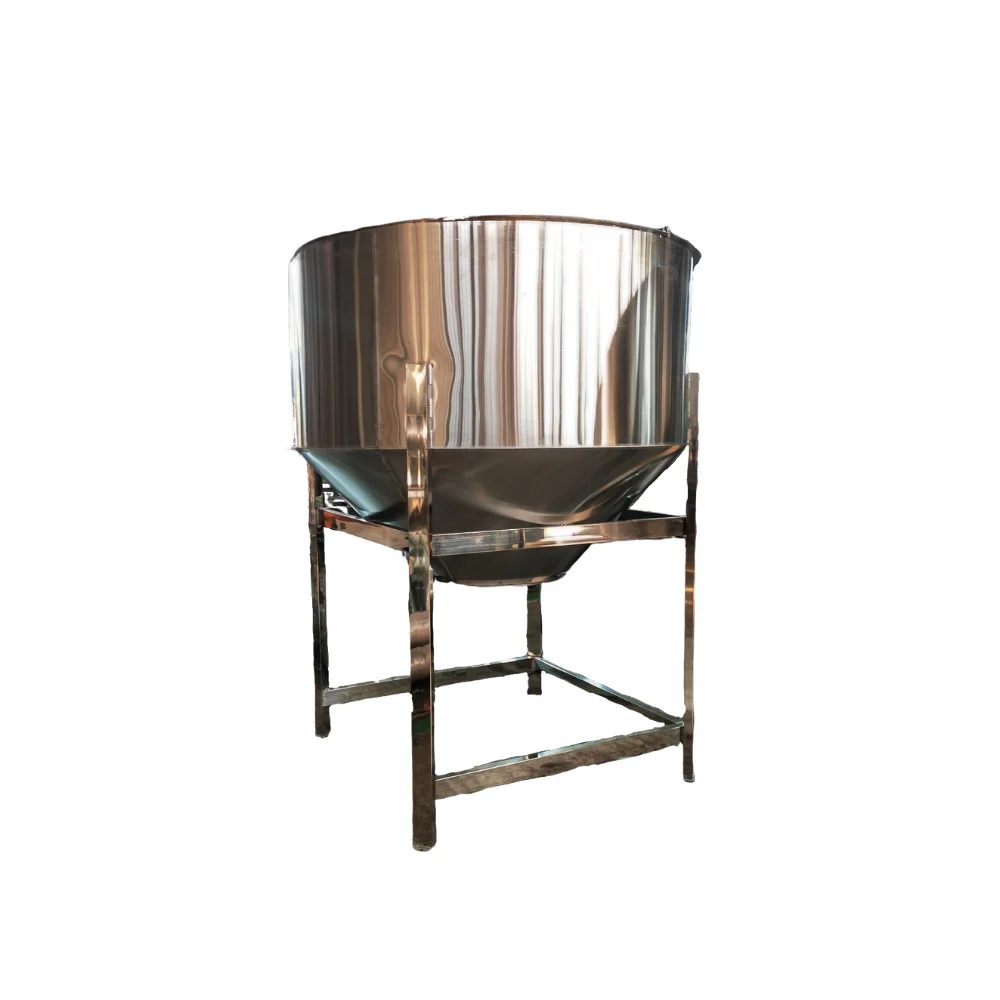
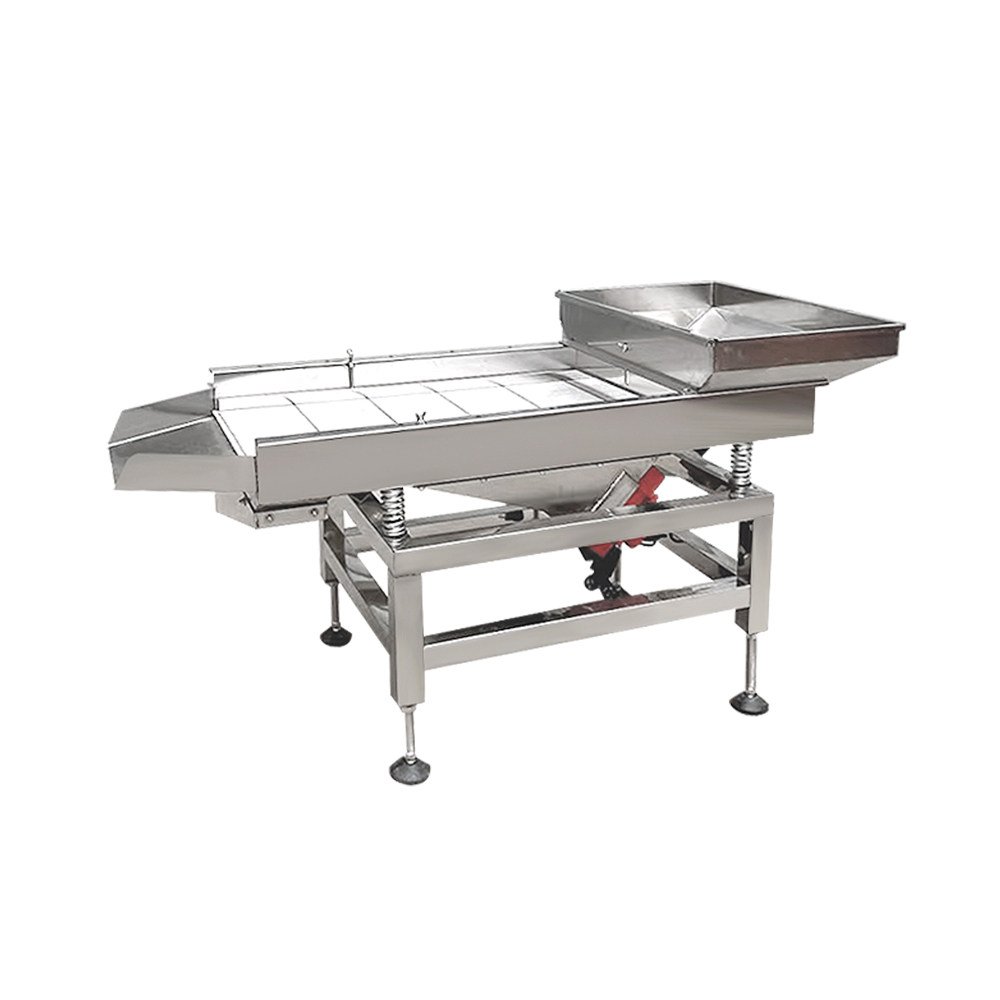
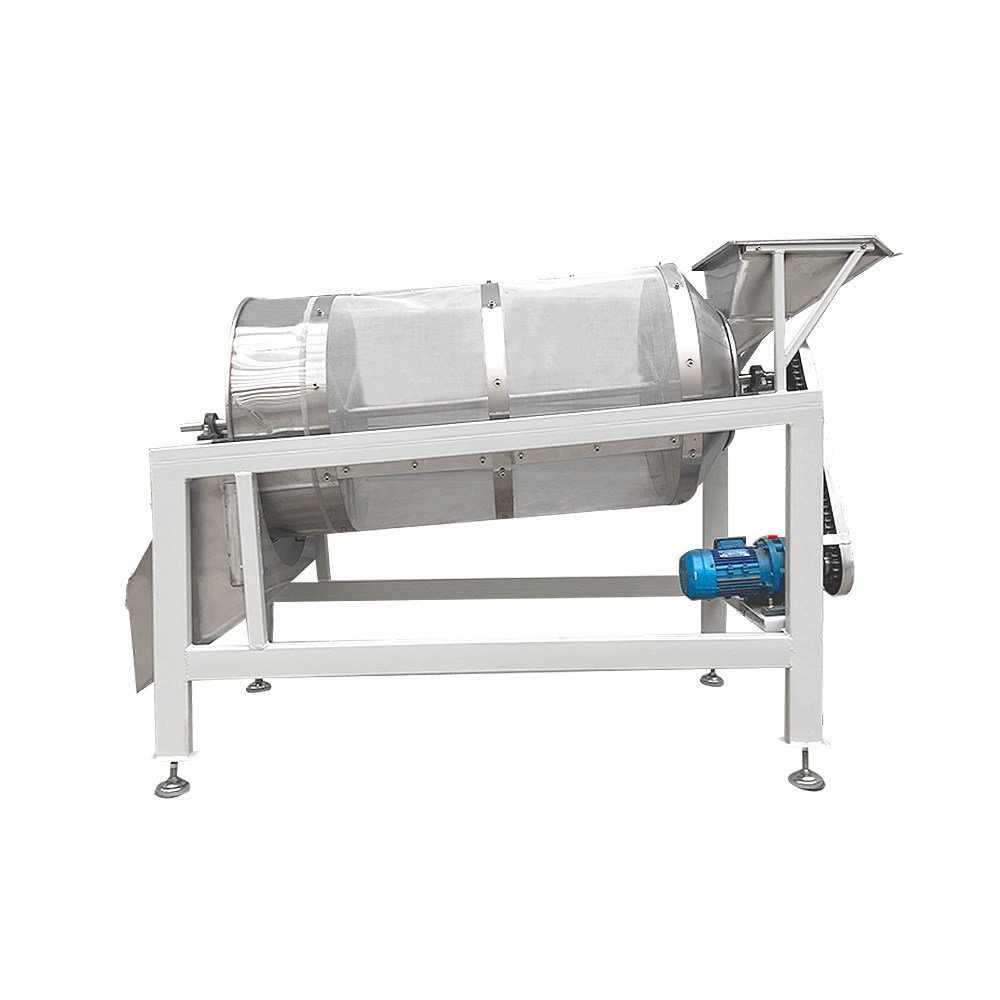
Material control before the next process
HCZDS industrial vibrating screen for classifying powders and granules. Effective diameters from 540 to 1886 mm, 1–4 decks and screens from 2 to 500 mesh.
The auxiliary equipment stabilizes the flow, separates fractions or stores the product so the main line runs continuously and in order.
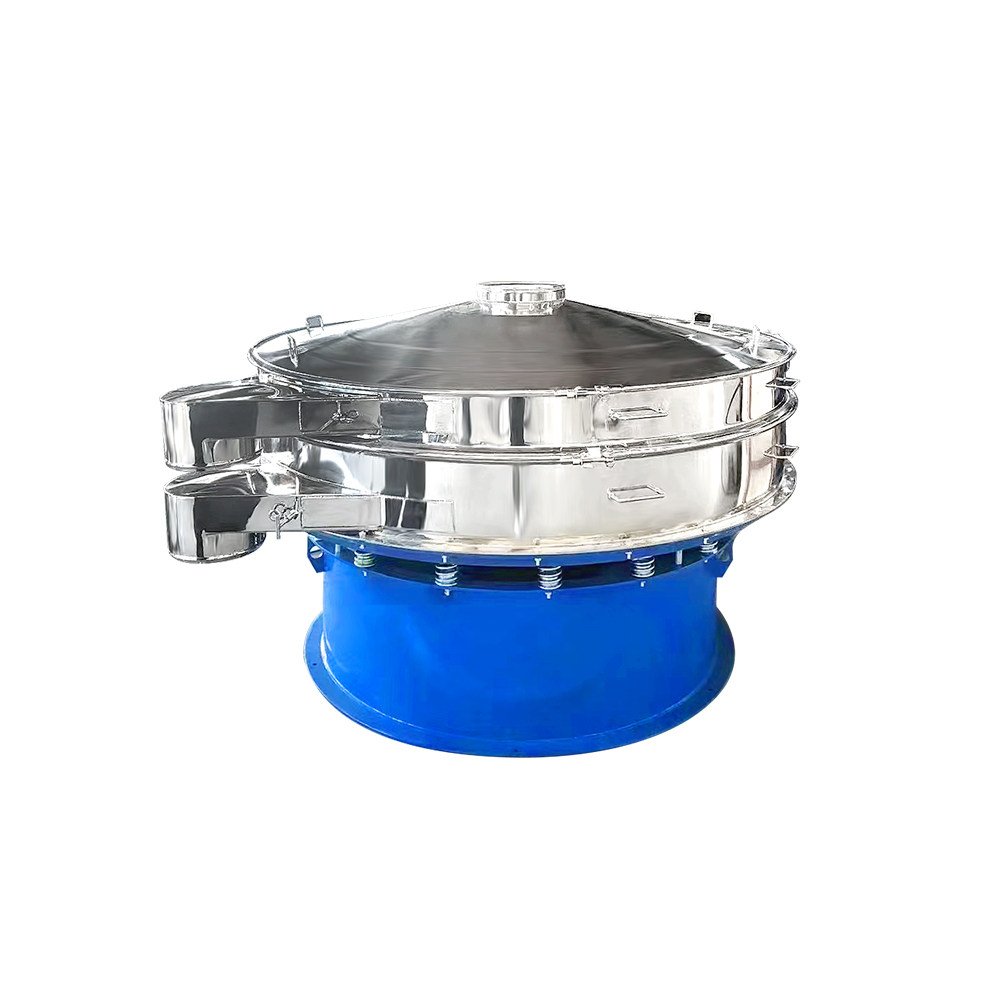
How it integrates into production
Reference specifications
| Models | HCZDS-600 to HCZDS-2000 |
|---|---|
| Effective diameter | 540–1886 mm |
| Effective area | 0.2289–2.7922 m² |
| Screen | 2–500 mesh/inch |
| Decks | 1–4 (models 600–1200) or 1–3 (models 1500–2000) |
| Vibratory motor | 0,25–3 kW |
| Conventional motor | 0.75–3 kW. |
Actual capacity depends on the material properties, particle size, moisture and working conditions.
Recommended applications
- Food lines
- Chemical and pharmaceutical processes
- Minerals, fertilizers and feed
Data needed to select the model
- Material and bulk density
- Input size and required output
- Capacity per hour or per batch
- Electrical supply and cleaning requirements
Selection and configuration table
| Selection item | Recommended configuration |
|---|---|
| Usable capacity | According to flow rate and retention time |
| Separation or discharge | Screen, valve or feeder |
| Instrumentation | Level, weight or optional flow control |
| Contact material | Carbon steel, SUS304 or SUS316L |
Specific equipment data
Material control before the next process
HCZDS industrial vibrating screen for classifying powders and granules. Effective diameters from 540 to 1886 mm, 1–4 decks and screens from 2 to 500 mesh.
The auxiliary equipment stabilizes the flow, separates fractions or stores the product so the main line runs continuously and in order.
How it integrates into production
Reference specifications
| Models | HCZDS-600 to HCZDS-2000 |
|---|---|
| Effective diameter | 540–1886 mm |
| Effective area | 0.2289–2.7922 m² |
| Screen | 2–500 mesh/inch |
| Decks | 1–4 (models 600–1200) or 1–3 (models 1500–2000) |
| Vibratory motor | 0,25–3 kW |
| Conventional motor | 0.75–3 kW. |
Actual capacity depends on the material properties, particle size, moisture and working conditions.
Recommended applications
- Food lines
- Chemical and pharmaceutical processes
- Minerals, fertilizers and feed
Data needed to select the model
- Material and bulk density
- Input size and required output
- Capacity per hour or per batch
- Electrical supply and cleaning requirements
Specific equipment data
What is a vibrating screen?
It is a mechanical unit that uses vibration to separate powders and granular materials into different grades by particle size. It accepts fine and coarse screens, continuous feeding and multi-deck configurations.
Main structure
- Vibrator: generates the force required for screening.
- Screen box: contains and supports the screen.
- Supports: springs or dampers that stabilize the equipment.
- Feeding and discharge: distribute and collect each fraction.
- Drive: transmits power and controls frequency.
Working principle
- The vibrator generates a cyclic motion and transmits it to the box.
- The material moves and spreads across the screen.
- Particles smaller than the opening pass through the screen; larger ones stay on top.
- Each fraction exits through its corresponding discharge chute.
Features and applications
- High efficiency through high-frequency vibration.
- Precise classification with screens of 2–500 mesh/inch.
- Closed or semi-closed design available to control dust.
- Food: spices, flour and granular ingredients.
- Chemicals: powders, plastic particles and mineral additives.
- Pharmaceuticals: powdered herbs and small granules.
- Cosmetics: powdered raw materials.
- Less clogging, simple structure and easy maintenance.
Technical parameters
| Model | Effective diameter | Area | Decks | Vibratory motor | Conventional motor |
|---|---|---|---|---|---|
| HCZDS-600 | 540 mm | 0.2289 m² | 1–4 | 0,25 kW | 0,75 kW |
| HCZDS-800 | 730 mm | 0.4183 m² | 1–4 | 0,55 kW | 1,1 kW |
| HCZDS-1000 | 900 mm | 0.6359 m² | 1–4 | 0,75 kW | 1,5 kW |
| HCZDS-1200 | 1100 mm | 0.9499 m² | 1–4 | 1,1 kW | 1,5 kW |
| HCZDS-1500 | 1400 mm | 1.5386 m² | 1–3 | 1,5 kW | 2,2 kW |
| HCZDS-1800 | 1700 mm | 2.2687 m² | 1–3 | 2,2 kW | 3 kW |
| HCZDS-2000 | 1886 mm | 2.7922 m² | 1–3 | 3 kW | 3 kW |
All models accept screens of 2–500 mesh/inch. Final capacity depends on material, moisture, screen opening and number of decks.
Configuration adapted to your process
We can adjust contact materials, capacity, dimensions, feeding, discharge and auxiliary equipment. Send a sample or process data to confirm the selection.
Request configuration and pricingConfiguration adapted to your process
We can adjust contact materials, capacity, dimensions, feeding, discharge and auxiliary equipment. Send a sample or process data to confirm the selection.
Request configuration and pricingFrequently asked questions about the Vibrating Screen
How is the right Vibrating Screen model selected?
We need to know the material, bulk density, moisture, initial and final size, capacity, working hours and electrical supply. With this data we recommend the model and auxiliary equipment.
Can the Vibrating Screen be customized?
Yes. Dimensions, screen, capacity, discharge, sensors and connections can be adapted to the existing line.
What manufacturing materials are available?
We normally offer carbon steel, SUS304 stainless steel and, for more demanding processes, SUS316L. The selection depends on corrosion, hygiene, abrasion and budget.
Is it easy to clean and maintain?
The design can include access points, brush cleaning, spraying or polished surfaces depending on the equipment function.
Can it be integrated into an automatic line?
Yes. It can be connected with feeding, conveying, mixing, screening, dust collection, PLC control and packaging according to the production flow.
Can a test be run with my material?
When the project requires it, we recommend a material test to confirm capacity, process results and configuration before manufacturing the final equipment.