Controlled batch drying on trays
A heat pump drying room for businesses that need controlled batch drying. Match the chamber, tray arrangement, and drying process to your material and production schedule.
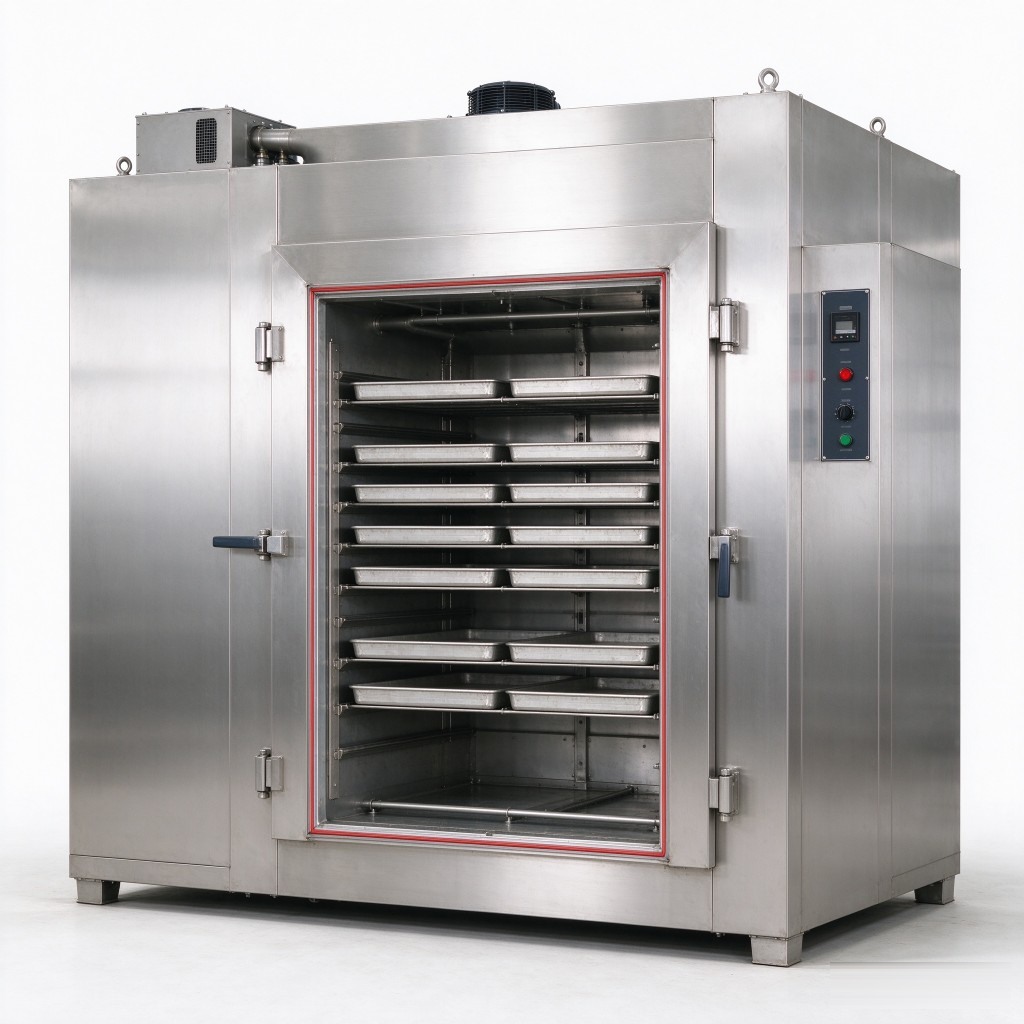
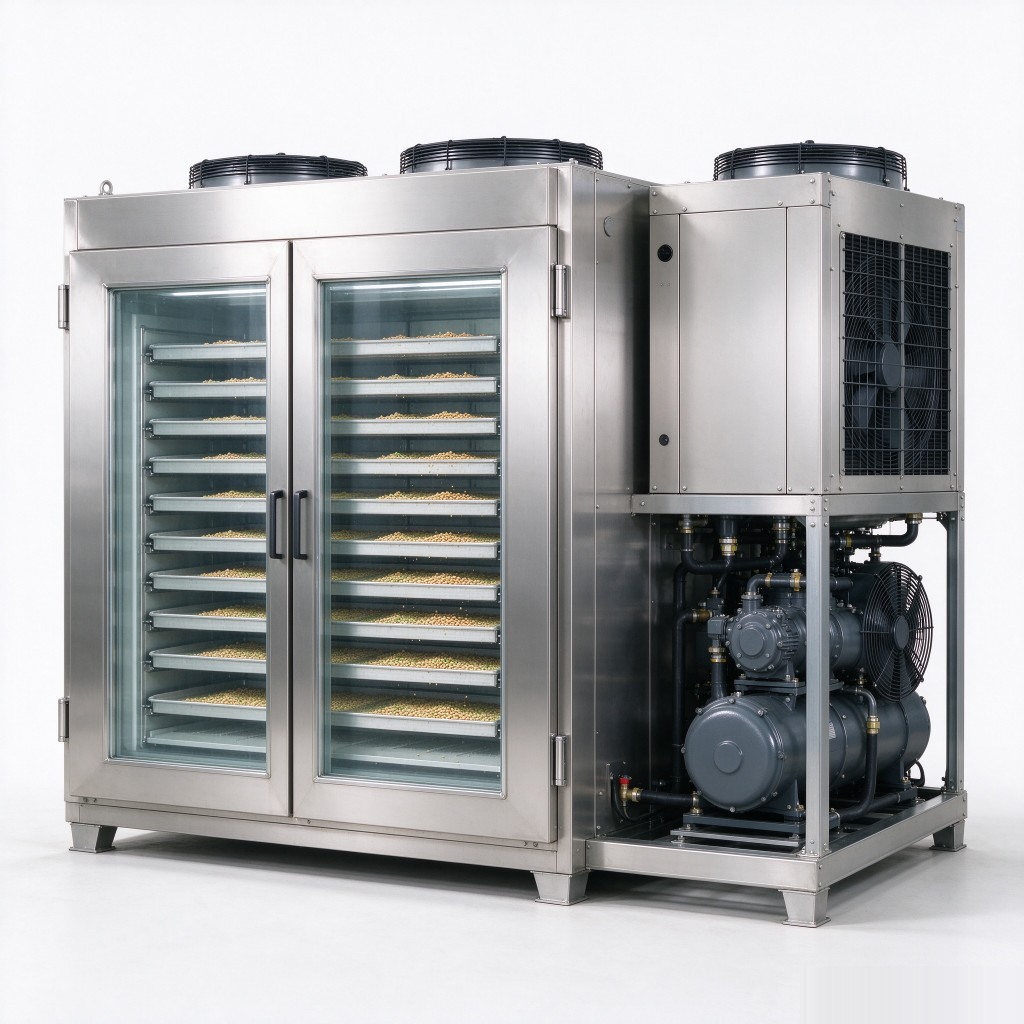
Pinchuang’s heat pump dryer combines a drying chamber with a heat pump system and circulating air. Material stays on trays while air carries moisture away. The heat pump transfers heat to the drying process. In a closed-loop configuration, moisture condenses out of the return air before the air is reheated and recirculated. Air management and dehumidification arrangements are specified for the selected model. Each proposal starts with your material, moisture targets, and required output.
How it works
Prepare and load
Spread prepared material on trays at an agreed loading depth. Tray spacing and loading density help determine how air reaches the product.
Circulate drying air
The heat pump supplies heat and fans move air through the chamber. Drying conditions follow the process selected for the material.
Remove moisture and unload
Moisture is removed through the specified dehumidification or air-exchange arrangement. Check the product against the agreed moisture target before unloading the batch.
What to consider when selecting this dryer
Stationary tray loading
Material remains on trays during drying, making this format worth considering when tumbling could damage the product or change its shape.
A process matched to the product
Discuss drying temperature, airflow, moisture control, and cycle time together. The best settings depend on the material and finished-product requirements.
Heat pump heating
Heat pump technology transfers heat rather than relying only on direct resistance heating. Actual electricity consumption depends on the configuration, ambient conditions, and moisture load.
Start with what you need to dry
These are application directions for discussion. The final equipment recommendation depends on the material and its drying behaviour.
- Plant materials. Consider herbs, leaves, flowers, and selected agricultural materials when controlled conditions and tray loading suit the product. Confirm results with a material trial.
- Food processing. Fruit, vegetables, and other prepared food materials may suit batch tray drying. Specify hygiene, cleaning, appearance, and finished-moisture requirements before selection.
- Selected industrial batches. Non-food materials can also be assessed. Share composition and handling requirements so compatibility, cleaning, and process conditions can be reviewed.
Information for your proposal
Use the same moisture measurement basis for incoming and finished material. Tell us whether the stated capacity is wet-feed weight or finished-product weight.
- Material name, composition, and a sample or clear photos
- Wet material weight per batch and daily production target
- Initial and target moisture content, using the same measurement basis
- Maximum acceptable product temperature and quality requirements
- Available electricity, installation country, and ambient conditions
- Required drying time, available floor space, and loading method
Request an equipment proposal
Share your material, moisture targets and output needs for a drying-room proposal.
Send Message Chat on WhatsAppBefore you choose a model
How much material can one batch hold?
Loading depends on bulk density, tray coverage, moisture content, and the required cycle time. Send your material and batch target for a suitable chamber proposal.
Is a heat pump dryer always the lowest-cost option?
No single system is best for every process. Compare the proposed energy consumption, drying time, installation needs, and output with your local electricity and fuel costs.
Can it dry industrial materials?
Suitable non-food materials can be evaluated. Dusty, corrosive, flammable, or solvent-containing materials require a specific compatibility review before any equipment recommendation.