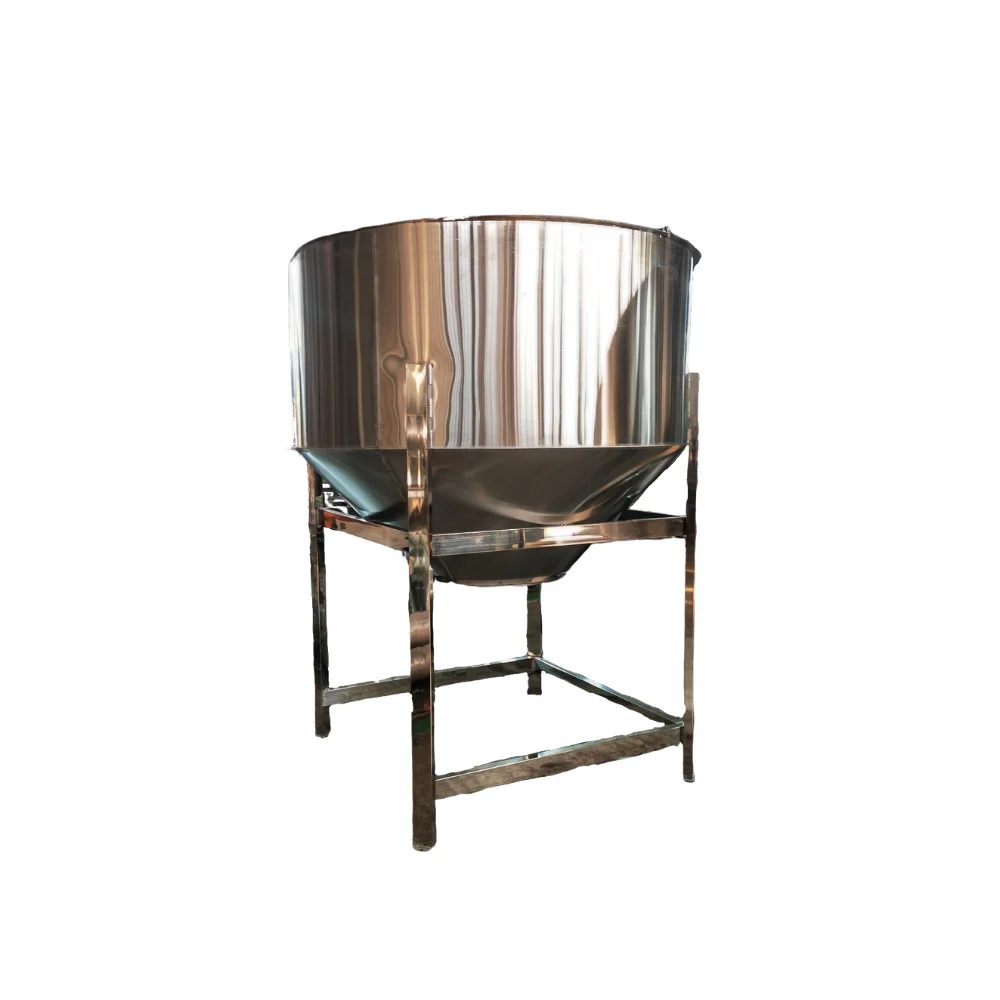
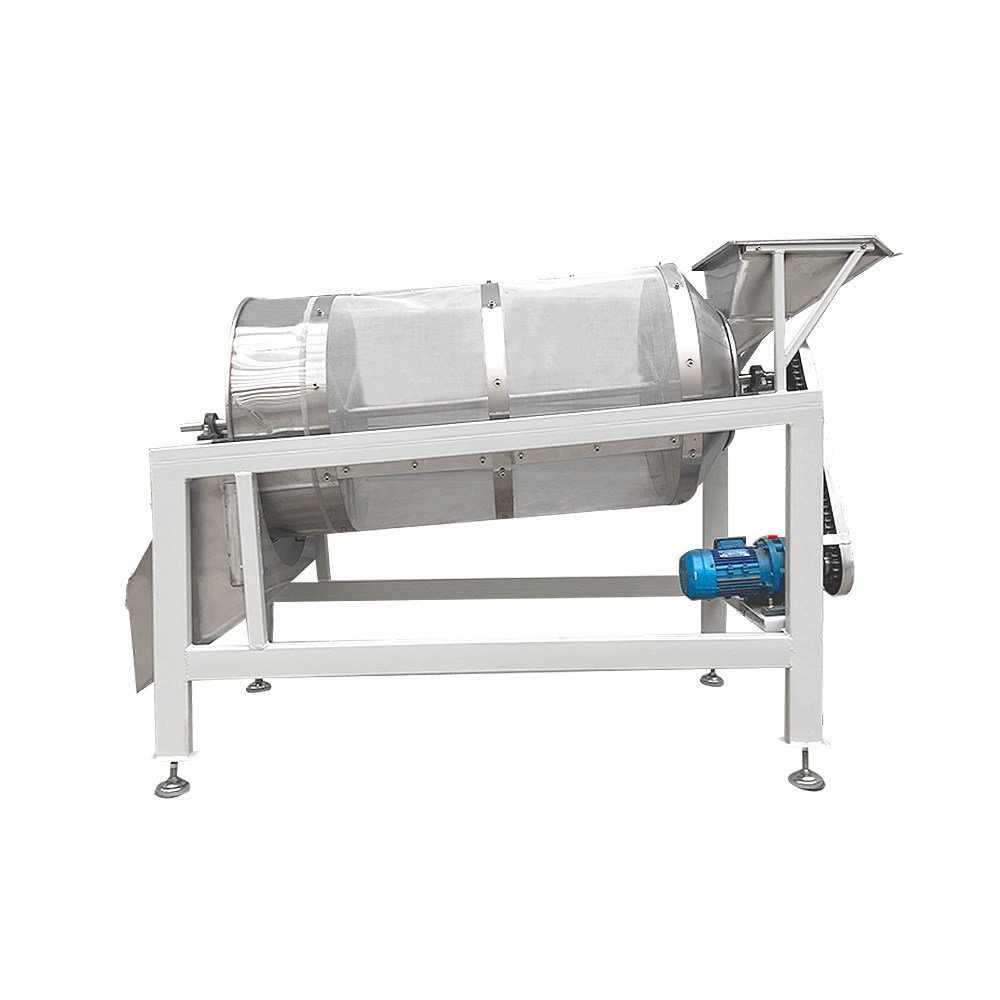
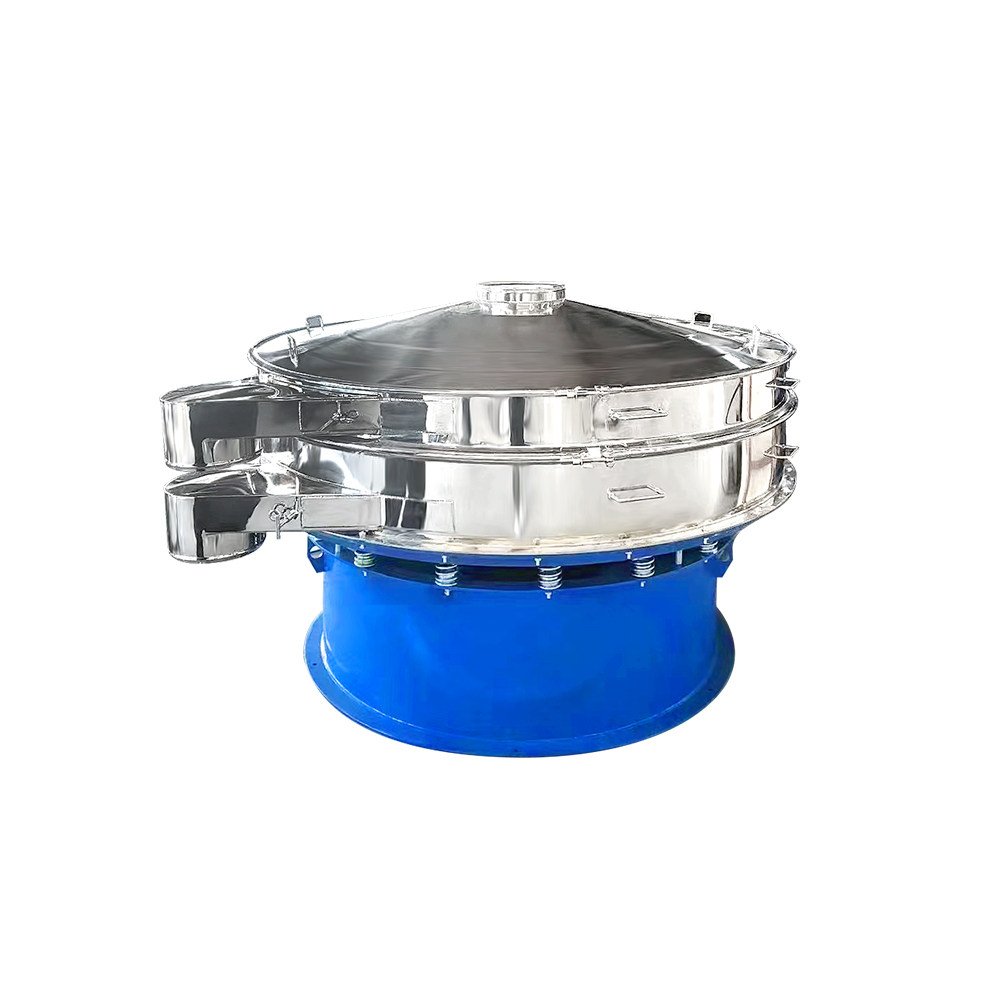
Material control before the next process
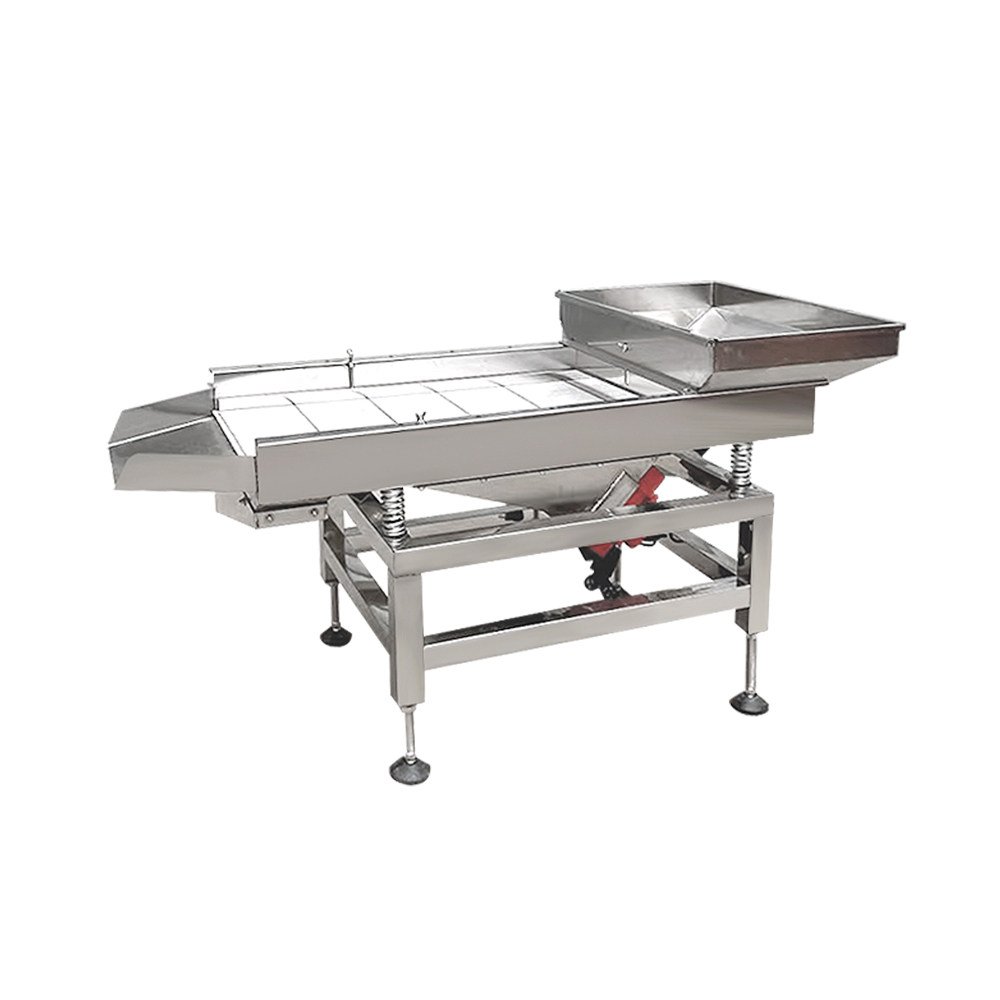
Linear vibrating screen with 1–6 decks for precise classification of powders and granules. LZS models with indicative capacities from 0.3 to 10 t/h.
The auxiliary equipment stabilizes the flow, separates fractions or stores the product so the main line runs continuously and in order.
How it integrates into production
Reference specifications
| Reference models | LZS-520, LZS-1020, LZS-1530 and LZS-2040 |
|---|---|
| Screening area | 500 × 2000 to 2000 × 4000 mm |
| Indicative capacity | 0,3–10 t/h |
| Power | 0.75–3.7 kW depending on model |
| Number of decks | 1–6 |
| Simultaneous classification | 2–6 fractions |
| Available materials | carbon steel, SS304 or SS316L |
| Noise level | below 75 dB |
| Drive | two vibration motors |
| Final configuration | according to material, moisture, screen opening and capacity. |
Actual capacity depends on the material properties, particle size, moisture and working conditions.
Recommended applications
- Food lines
- Chemical and pharmaceutical processes
- Minerals, fertilizers and feed
Data needed to select the model
- Material and bulk density
- Input size and required output
- Capacity per hour or per batch
- Electrical supply and cleaning requirements
Selection and configuration table
| Selection item | Recommended configuration |
|---|---|
| Usable capacity | According to flow rate and retention time |
| Separation or discharge | Screen, valve or feeder |
| Instrumentation | Level, weight or optional flow control |
| Contact material | Carbon steel, SUS304 or SUS316L |
Specific equipment data
Material control before the next process
Linear vibrating screen with 1–6 decks for precise classification of powders and granules. LZS models with indicative capacities from 0.3 to 10 t/h.
The auxiliary equipment stabilizes the flow, separates fractions or stores the product so the main line runs continuously and in order.
How it integrates into production
Reference specifications
| Reference models | LZS-520, LZS-1020, LZS-1530 and LZS-2040 |
|---|---|
| Screening area | 500 × 2000 to 2000 × 4000 mm |
| Indicative capacity | 0,3–10 t/h |
| Power | 0.75–3.7 kW depending on model |
| Number of decks | 1–6 |
| Simultaneous classification | 2–6 fractions |
| Available materials | carbon steel, SS304 or SS316L |
| Noise level | below 75 dB |
| Drive | two vibration motors |
| Final configuration | according to material, moisture, screen opening and capacity. |
Actual capacity depends on the material properties, particle size, moisture and working conditions.
Recommended applications
- Food lines
- Chemical and pharmaceutical processes
- Minerals, fertilizers and feed
Data needed to select the model
- Material and bulk density
- Input size and required output
- Capacity per hour or per batch
- Electrical supply and cleaning requirements
Specific equipment data
What is a linear vibrating screen?
A linear vibrating screen is a high-efficiency unit for precisely separating and classifying powders, granules and small bulk materials. Two vibration motors drive the screen with a reciprocating linear motion, classifying particles and removing off-size impurities.
It can work in dry or wet screening operations and is used in the food, chemical, metallurgical, pharmaceutical and construction materials industries.
Function within the production line
A typical flow is:
Crushing → Conveying → Linear vibrating screen → Mixing or packaging
- Separates material by particle size.
- Removes particles that are too large or too fine.
- Improves uniformity before mixing, dosing or final delivery.
Main functions
- Precise classification: multi-deck configurations yield 2 to 6 fractions simultaneously.
- High screening efficiency: stable vibration moves material quickly across the screening surface.
- Adjustable parameters: amplitude, frequency and inclination can be adapted to the material and production goal.
- Low consumption and noise: the published noise level is below 75 dB.
- Easy cleaning: the quick-release system makes screen changes and cleaning between products easy.
Available configurations
| Configuration | Decks | Material | Discharge | Application |
|---|---|---|---|---|
| Standard | 1–3 | Carbon steel | One outlet | Chemicals and mining |
| Food grade | 1–4 | SS304 / SS316L | Multiple outlets | Food and pharmacy |
| Closed and dust-proof | 1–5 | SS304 | Two outlets | Powder processing |
Applications
- Food: starch, flour, sugar, milk powder and powdered coffee.
- Chemical industry: resins, pigments, plastic granules and fertilizers.
- Metallurgy and mining: sand, quartz and metal powders.
- Pharmaceutical industry: medicinal powders and granules.
- Construction materials: cement, lime and ceramic powders.
Product advantages
- Linear vibration path for uniform, repeatable separation.
- Single- or multi-deck design for different classification requirements.
- Fully enclosed construction available to prevent dust leakage.
- Robust construction in carbon steel or stainless steel.
- Optional anti-clogging devices and frequency control.
- Easy integration with conveyors, elevators and automatic lines.
Reference technical specifications
| Model | Screening area | Power | Indicated material | Indicative capacity | Typical application |
|---|---|---|---|---|---|
| LZS-520 | 500 × 2000 mm | 0,75 kW | Carbon steel | 0,3–1 t/h | Food and chemicals |
| LZS-1020 | 1000 × 2000 mm | 1,1 kW | SS304 | 1–3 t/h | Starch and flour |
| LZS-1530 | 1500 × 3000 mm | 2,2 kW | SS304 | 3–6 t/h | Powder processing |
| LZS-2040 | 2000 × 4000 mm | 3,7 kW | SS316L | 5–10 t/h | Chemical industry and mining |
Actual capacity depends on bulk density, moisture, screen opening, number of decks and material flow characteristics. The final selection must be confirmed with product data or a screening test.
Configuration adapted to your process
We can adjust contact materials, capacity, dimensions, feeding, discharge and auxiliary equipment. Send a sample or process data to confirm the selection.
Request configuration and pricingConfiguration adapted to your process
We can adjust contact materials, capacity, dimensions, feeding, discharge and auxiliary equipment. Send a sample or process data to confirm the selection.
Request configuration and pricingFrequently asked questions about the Linear Vibrating Screen
How is the right Linear Vibrating Screen model selected?
We need to know the material, bulk density, moisture, initial and final size, capacity, working hours and electrical supply. With this data we recommend the model and auxiliary equipment.
Can the Linear Vibrating Screen be customized?
Yes. Dimensions, screen, capacity, discharge, sensors and connections can be adapted to the existing line.
What manufacturing materials are available?
We normally offer carbon steel, SUS304 stainless steel and, for more demanding processes, SUS316L. The selection depends on corrosion, hygiene, abrasion and budget.
Is it easy to clean and maintain?
The design can include access points, brush cleaning, spraying or polished surfaces depending on the equipment function.
Can it be integrated into an automatic line?
Yes. It can be connected with feeding, conveying, mixing, screening, dust collection, PLC control and packaging according to the production flow.
Can a test be run with my material?
When the project requires it, we recommend a material test to confirm capacity, process results and configuration before manufacturing the final equipment.