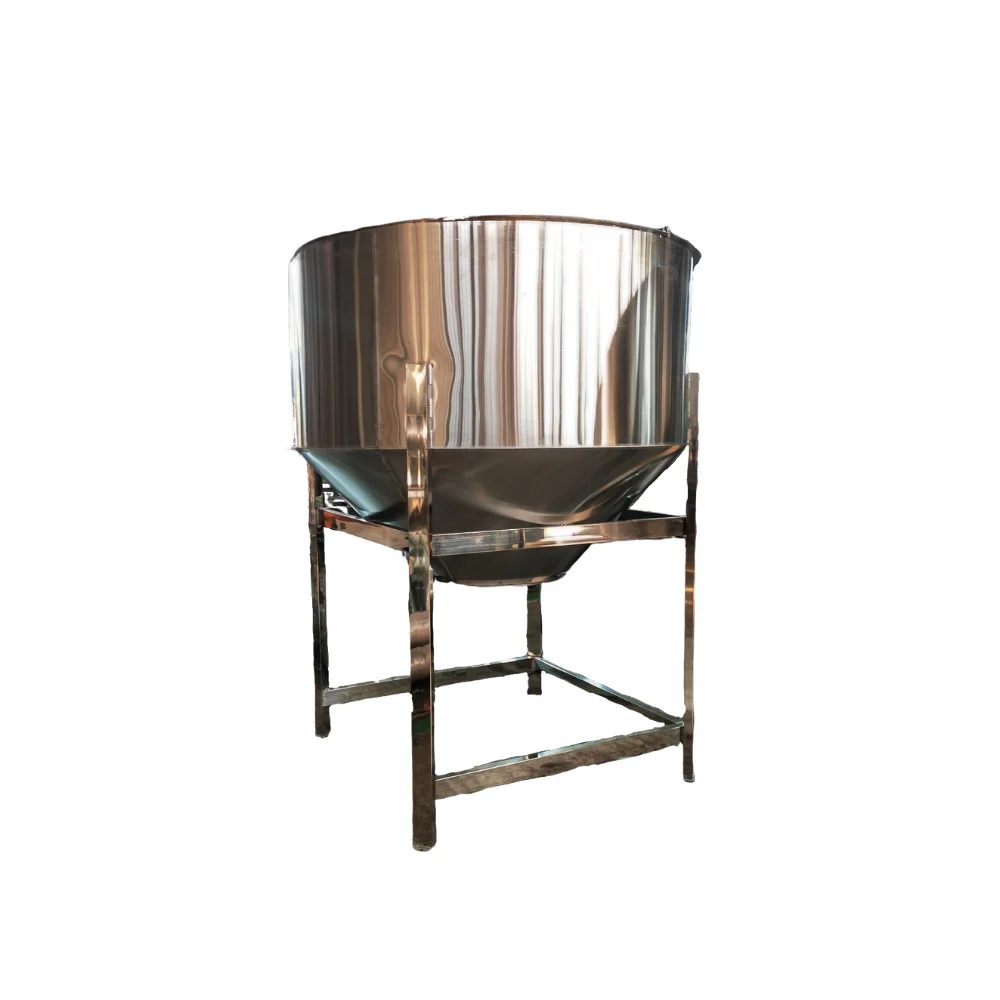
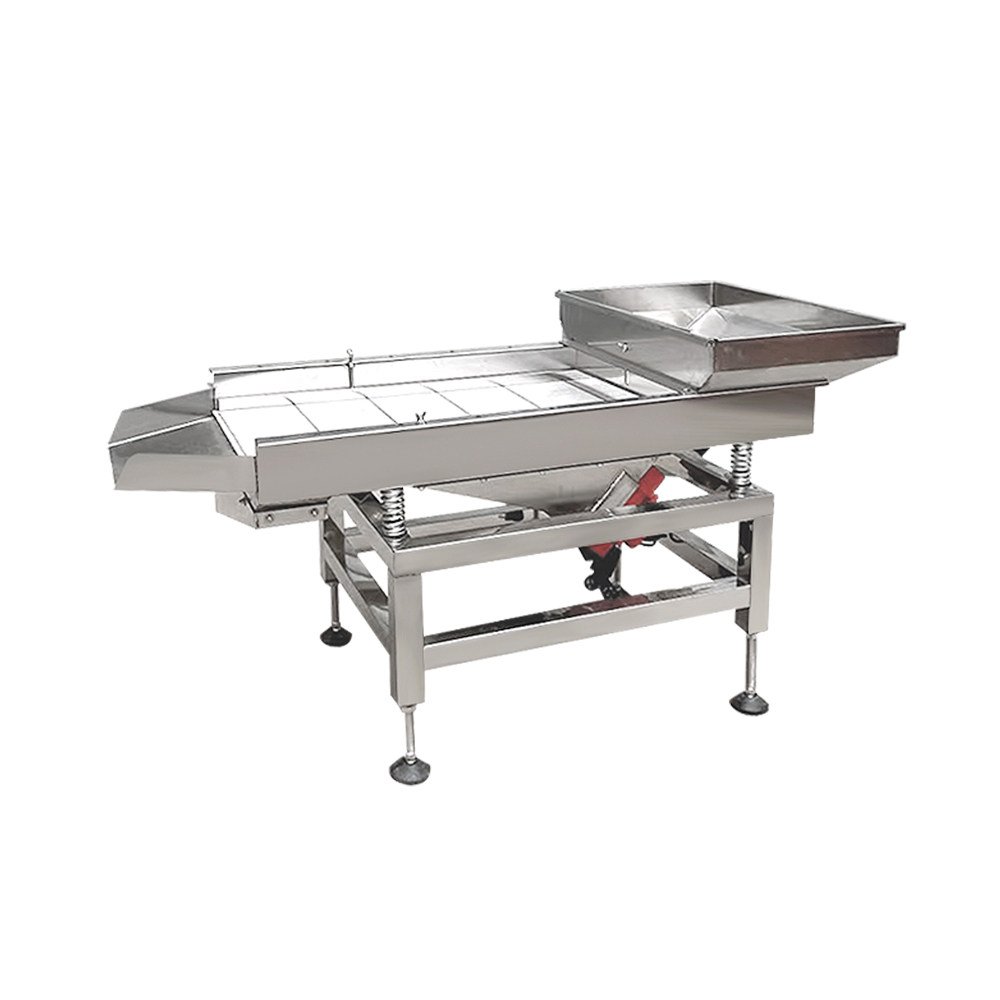
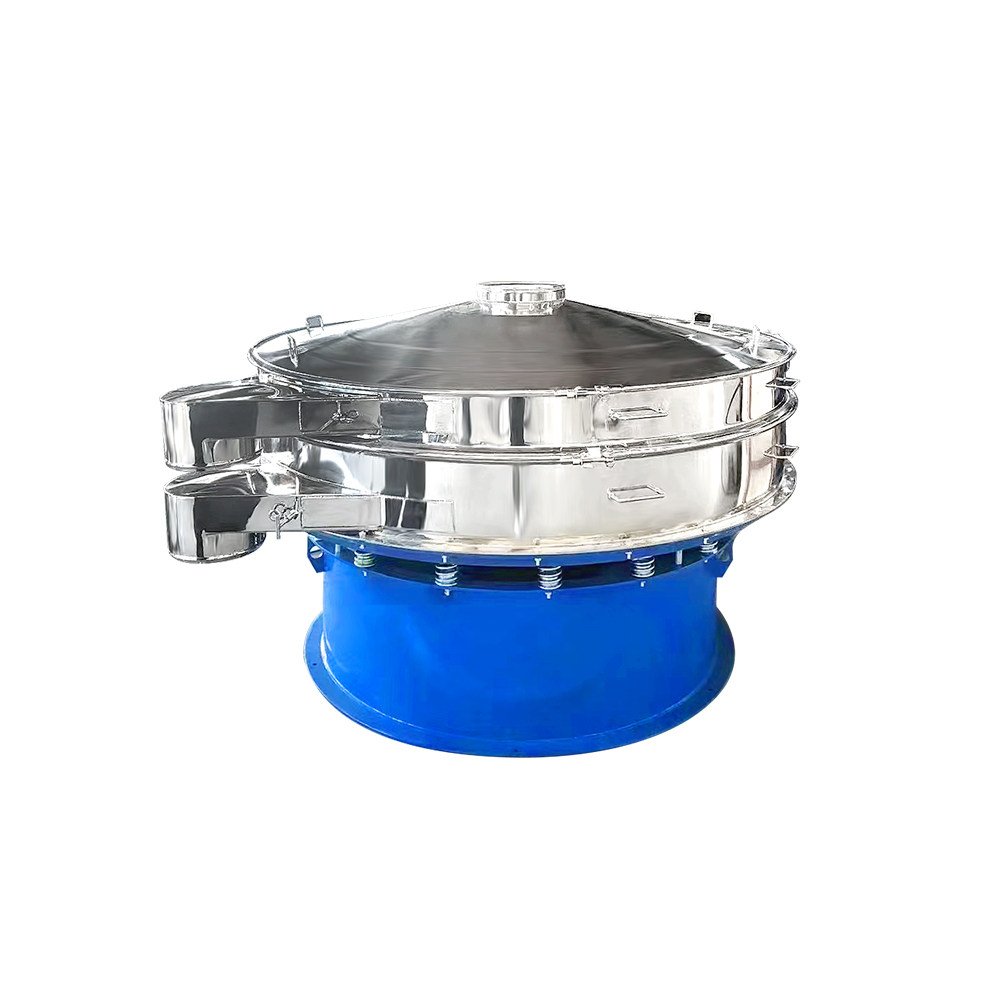
Material control before the next process
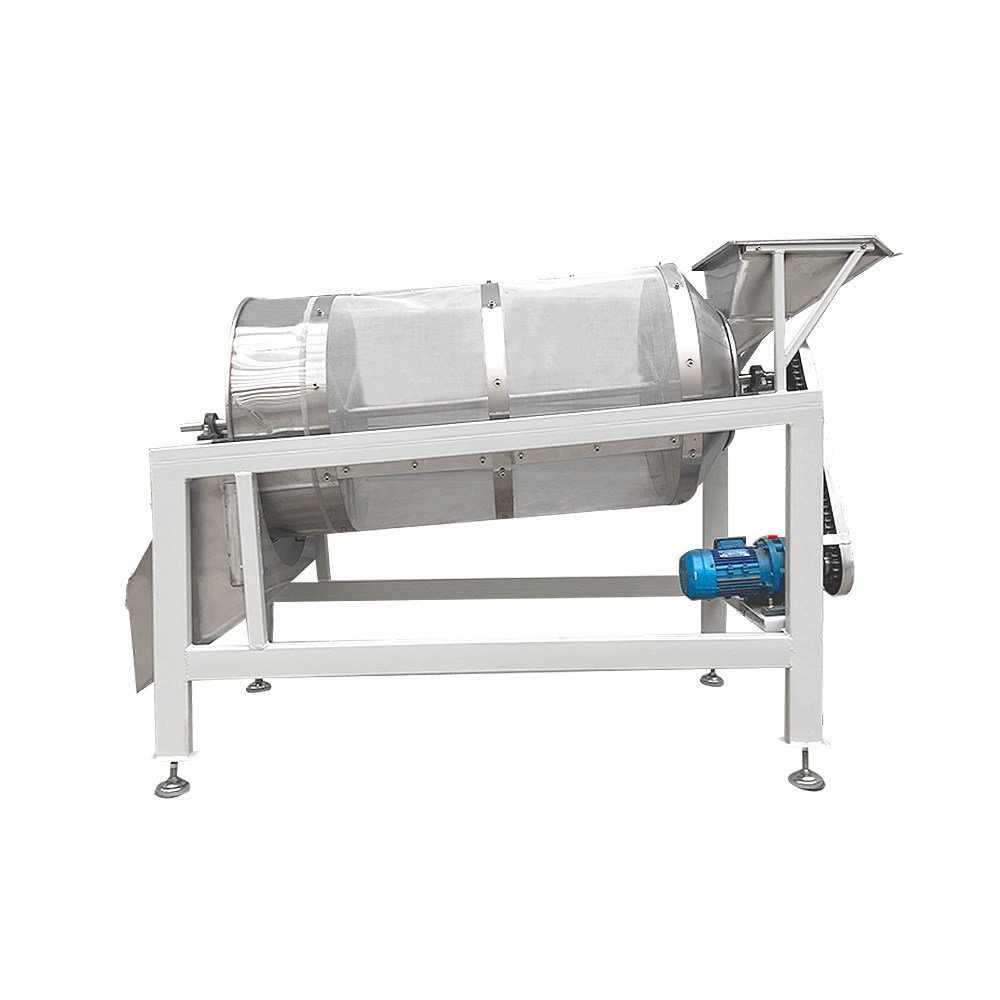
Continuous rotary drum screen for removing solids, fibers and residue from liquids. RDS models from 5 to 60 m³/h in SS304 or SS316L.
The auxiliary equipment stabilizes the flow, separates fractions or stores the product so the main line runs continuously and in order.
How it integrates into production
Reference specifications
| Models | RDS-600, RDS-800, RDS-1000 and RDS-1200 |
|---|---|
| Drum diameter | 600–1200 mm |
| Length | 1000–2000 mm |
| Filtration opening | 0,3–2,0 mm |
| Indicative capacity | 5–60 m³/h |
| Reference power | 0,75/1,5 kW |
| Materials | SS304, SS316L or carbon steel |
| Cleaning | counter-current spraying, brush and rinse or rotary system. |
Actual capacity depends on the material properties, particle size, moisture and working conditions.
Recommended applications
- Food lines
- Chemical and pharmaceutical processes
- Minerals, fertilizers and feed
Data needed to select the model
- Material and bulk density
- Input size and required output
- Capacity per hour or per batch
- Electrical supply and cleaning requirements
Selection and configuration table
| Selection item | Recommended configuration |
|---|---|
| Usable capacity | According to flow rate and retention time |
| Separation or discharge | Screen, valve or feeder |
| Instrumentation | Level, weight or optional flow control |
| Contact material | Carbon steel, SUS304 or SUS316L |
Specific equipment data
Material control before the next process
Continuous rotary drum screen for removing solids, fibers and residue from liquids. RDS models from 5 to 60 m³/h in SS304 or SS316L.
The auxiliary equipment stabilizes the flow, separates fractions or stores the product so the main line runs continuously and in order.
How it integrates into production
Reference specifications
| Models | RDS-600, RDS-800, RDS-1000 and RDS-1200 |
|---|---|
| Drum diameter | 600–1200 mm |
| Length | 1000–2000 mm |
| Filtration opening | 0,3–2,0 mm |
| Indicative capacity | 5–60 m³/h |
| Reference power | 0,75/1,5 kW |
| Materials | SS304, SS316L or carbon steel |
| Cleaning | counter-current spraying, brush and rinse or rotary system. |
Actual capacity depends on the material properties, particle size, moisture and working conditions.
Recommended applications
- Food lines
- Chemical and pharmaceutical processes
- Minerals, fertilizers and feed
Data needed to select the model
- Material and bulk density
- Input size and required output
- Capacity per hour or per batch
- Electrical supply and cleaning requirements
Specific equipment data
What is a rotary drum screen?
It is a mechanical filtration unit for separating solids and liquids. A rotating drum fitted with fine mesh, wedge wire or perforated plate retains suspended solids, fibers and residue, while the filtered liquid moves to the next stage.
Its continuous, stable and automatable operation suits water treatment, food, beverages, chemicals, pulp and paper.
Function in the line
Raw material → Washing or separation → Drum screen → Filtration → Next process
- Retains suspended particles and fibers.
- Protects pumps and downstream equipment.
- Stabilizes the flow rate and quality of the treated liquid.
Main functions
- Solid-liquid separation: precise removal of residue and fibers.
- Continuous operation: the rotating drum enables prolonged automatic filtration.
- Self-cleaning: spraying, brush and rinse options reduce downtime.
- Uniform screening: rotation distributes the material over the filtering surface.
- Low consumption: combines moderate power with high flow rate.
Configurations
| Type | Material | Filter element | Cleaning |
|---|---|---|---|
| Open drum | SS304 / SS316L | Wedge wire | Counter-current spraying |
| Closed type | SS316L | Perforated plate | Brush and rinse |
| Inclined type | Carbon steel | Wire mesh | Rotary cleaning |
Applications and advantages
- Industrial and municipal wastewater.
- Food, beverages, slaughterhouses and vegetable processing.
- Chemical production and waste separation.
- Pulp, paper and fiber processes.
- Corrosion-resistant, long-lasting stainless steel screen.
- Opening customizable from 0.1 to 5 mm.
- Easy integration into automatic lines.
Reference specifications
| Model | Diameter | Length | Opening | Material | Capacity | Application |
|---|---|---|---|---|---|---|
| RDS-600 | 600 mm | 1000 mm | 0,3 mm | SS304 | 5–15 m³/h | Food and beverages |
| RDS-800 | 800 mm | 1200 mm | 0,5 mm | SS304 | 10–25 m³/h | Wastewater |
| RDS-1000 | 1000 mm | 1500 mm | 1,0 mm | SS316L | 20–40 m³/h | Chemical industry |
| RDS-1200 | 1200 mm | 2000 mm | 2,0 mm | SS316L | 30–60 m³/h | Pulp and paper |
Actual flow rate depends on solids concentration, viscosity, opening, temperature and product characteristics.
Configuration adapted to your process
We can adjust contact materials, capacity, dimensions, feeding, discharge and auxiliary equipment. Send a sample or process data to confirm the selection.
Request configuration and pricingConfiguration adapted to your process
We can adjust contact materials, capacity, dimensions, feeding, discharge and auxiliary equipment. Send a sample or process data to confirm the selection.
Request configuration and pricingFrequently asked questions about the Rotary Drum Screen
How is the right Rotary Drum Screen model selected?
We need to know the material, bulk density, moisture, initial and final size, capacity, working hours and electrical supply. With this data we recommend the model and auxiliary equipment.
Can the Rotary Drum Screen be customized?
Yes. Dimensions, screen, capacity, discharge, sensors and connections can be adapted to the existing line.
What manufacturing materials are available?
We normally offer carbon steel, SUS304 stainless steel and, for more demanding processes, SUS316L. The selection depends on corrosion, hygiene, abrasion and budget.
Is it easy to clean and maintain?
The design can include access points, brush cleaning, spraying or polished surfaces depending on the equipment function.
Can it be integrated into an automatic line?
Yes. It can be connected with feeding, conveying, mixing, screening, dust collection, PLC control and packaging according to the production flow.
Can a test be run with my material?
When the project requires it, we recommend a material test to confirm capacity, process results and configuration before manufacturing the final equipment.